
Forge Algorithmic Prowess: Python Stacks & Queues
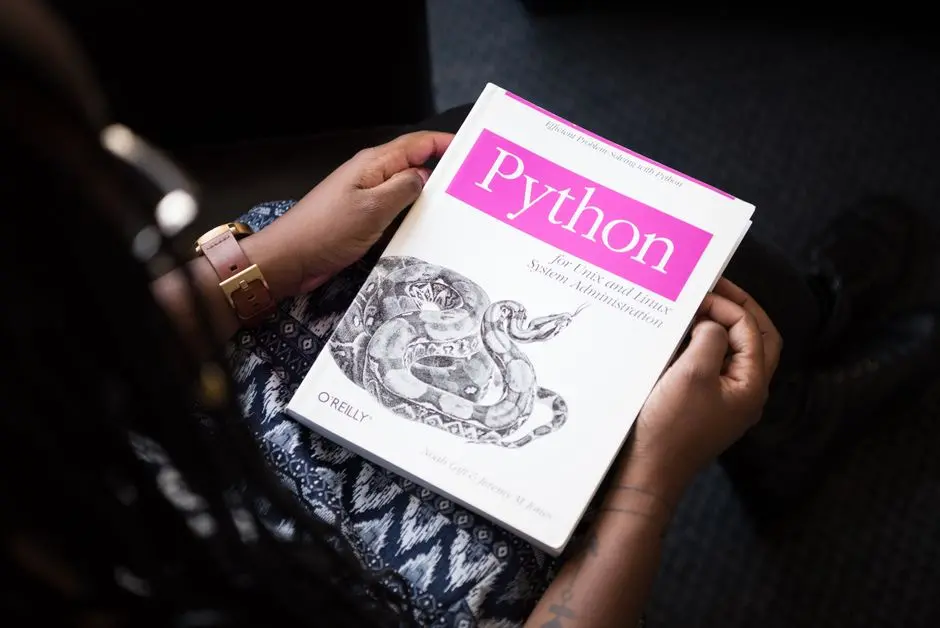
Embark on a critical exploration of fundamental data structures that underpin efficient algorithmic solutions. We dissect stacks and queues, the bedrock tools for managing data flows and orchestrating complex operations within software systems. Mastering these structures is not merely an academic exercise; it's a strategic imperative for any developer committed to building high-performance, scalable applications.
This comprehensive guide activates your understanding of LIFO (Last-In, First-Out) and FIFO (First-In, First-Out) principles, guiding you through robust Python implementations using both built-in types and specialized modules. We chart a course from foundational concepts to advanced applications, equipping you with the expertise to organize and manipulate data efficiently in Python. Prepare to decode the subtle nuances, common pitfalls, and optimal strategies for deploying stacks and queues across diverse computational challenges, transforming complex problems into elegant, efficient code. Your journey to algorithmic mastery commences now.
Forge Stack Foundations: LIFO Mechanics and Python Implementations
We initiate our journey by forging a robust understanding of the stack, a fundamental linear data structure operating on the principle of LIFO: Last-In, First-Out. Imagine a stack of plates; the last plate added is always the first one removed. This principle dictates a specific order of operations, crucial for managing tasks where the most recent action must be processed first.
Key operations define a stack's behavior:
- Push: Adds an element to the top of the stack.
- Pop: Removes and returns the top element from the stack. Attempting to pop from an empty stack results in an error.
- Peek (or Top): Returns the top element without removing it. Essential for inspection.
- IsEmpty: Checks if the stack contains any elements.
- Size: Returns the number of elements in the stack.
Python offers elegant ways to implement stacks. The most straightforward approach utilizes a standard Python list. Appending to the end of a list (`list.append()`) and popping from the end (`list.pop()`) are both highly efficient operations, typically executing in O(1) time complexity. This makes Python lists a practical choice for many stack implementations. However, for scenarios demanding extreme performance and thread safety, especially with very large data volumes or concurrent access, specialized structures become imperative. For general-purpose, high-performance stacks, the collections.deque (double-ended queue) is often preferred, offering consistent O(1) time complexity for additions and removals at both ends, making it a superior choice for dynamic stack operations. We activate its use as a primary tool.
import collections

# --- 1. Python List as a Stack (Simple but can be inefficient for very large scales due to reallocations) ---
# Push operation: Adding an element to the top of the stack
# O(1) average case when appending to the end
stack_list = []
stack_list.append('Data_A')
stack_list.append('Data_B')
stack_list.append('Data_C')
print(f"List-based stack after pushes: {stack_list}")

# Pop operation: Removing the top element
# O(1) for pop() from the end
popped_item_list = stack_list.pop()
print(f"Popped from list stack: {popped_item_list}")
print(f"List-based stack after pop: {stack_list}")

# Peek operation: Viewing the top element without removing it
# Check if stack is not empty before peeking
if stack_list:
    print(f"Peek (list-based stack): {stack_list[-1]}")

print("\n")

# --- 2. collections.deque as a Stack (Recommended for performance and consistency) ---
# Deques (double-ended queues) offer O(1) append and pop from either end.
# Ideal for stack implementation.
stack_deque = collections.deque()

# Push operation (append to the right for stack top)
stack_deque.append('Task_1')
stack_deque.append('Task_2')
stack_deque.append('Task_3')
print(f"Deque-based stack after pushes: {stack_deque}")

# Pop operation (pop from the right for stack top)
popped_item_deque = stack_deque.pop()
print(f"Popped from deque stack: {popped_item_deque}")
print(f"Deque-based stack after pop: {stack_deque}")

# Peek operation (access the rightmost element)
if stack_deque:
    print(f"Peek (deque-based stack): {stack_deque[-1]}")

# Check if empty
is_empty_deque = not stack_deque
print(f"Is deque stack empty? {is_empty_deque}")
Engineer Advanced Stacks: Optimizing Performance and Use Cases
Engineering a robust stack moves beyond basic list utilization to encapsulate behavior and optimize performance. While Python lists serve adequately for many applications, constructing a dedicated Stack class provides abstraction, enforces strict LIFO principles, and prepares for more complex scenarios. We leverage collections.deque internally within our custom Stack class to guarantee O(1) time complexity for both push and pop operations, a critical performance characteristic. Unlike lists, which might incur O(N) cost for insertions or deletions at the beginning due to element shifting, deque is designed for efficient operations at both ends.
A well-engineered Stack class includes methods like push(), pop(), peek(), is_empty(), and size(). Implementing proper error handling, such as raising an IndexError when attempting to pop() or peek() from an empty stack, elevates the robustness of our data structure. This ensures predictable behavior and prevents silent failures. Furthermore, encapsulating the underlying data structure within a class allows us to easily swap out implementations (e.g., from a list to a deque) without affecting external code that uses our Stack object. This strategy is a cornerstone of modular, maintainable software development.
Stacks are indispensable for a multitude of algorithmic solutions. Consider the challenge of validating balanced parentheses in a mathematical expression or code. As we iterate through the expression, opening brackets are pushed onto the stack. Upon encountering a closing bracket, we pop the top element and check for a match. An empty stack at the end, coupled with no mismatches, confirms balance. Stacks also empower functionalities like undo/redo systems in text editors, navigating browser history, and managing function call frames in program execution. Mastering their deployment unlocks significant algorithmic leverage.
import collections

class Stack:
    def __init__(self):
        # Use collections.deque for efficient stack operations (O(1) append/pop)
        self._elements = collections.deque()

    def push(self, item):
        """Adds an item to the top of the stack."""
        self._elements.append(item)
        print(f"Pushed: {item}. Stack: {list(self._elements)}")

    def pop(self):
        """Removes and returns the item from the top of the stack.
        Raises IndexError if the stack is empty."""
        if self.is_empty():
            raise IndexError("Pop from empty stack")
        popped = self._elements.pop()
        print(f"Popped: {popped}. Stack: {list(self._elements)}")
        return popped

    def peek(self):
        """Returns the item from the top of the stack without removing it.
        Raises IndexError if the stack is empty."""
        if self.is_empty():
            raise IndexError("Peek from empty stack")
        return self._elements[-1]

    def is_empty(self):
        """Checks if the stack is empty."""
        return len(self._elements) == 0

    def size(self):
        """Returns the number of items in the stack."""
        return len(self._elements)

    def __len__(self):
        return self.size()

    def __str__(self):
        return str(list(self._elements))

# Example Usage:
my_stack = Stack()
print(f"Initial stack empty: {my_stack.is_empty()}, size: {my_stack.size()}")

my_stack.push(10)
my_stack.push(20)
my_stack.push(30)

print(f"Current stack top: {my_stack.peek()}")
print(f"Stack size: {my_stack.size()}")

my_stack.pop()
my_stack.push(40)

print(f"Final stack: {my_stack}")

# Common use case: Parentheses matching
def check_parentheses(expression):
    s = Stack()
    mapping = {')': '(', ']': '[', '}': '{'}
    for char in expression:
        if char in mapping.values(): # Opening bracket
            s.push(char)
        elif char in mapping.keys(): # Closing bracket
            if s.is_empty() or s.pop() != mapping[char]:
                return False # Mismatch or unmatched closing bracket
    return s.is_empty() # All brackets should be matched

print(f"\nParentheses matching example:")
print(f"'(()){{}}[]' is balanced: {check_parentheses('(()){{}}[]')}") # Expected: True
print(f"'([)]' is balanced: {check_parentheses('([)]')}")     # Expected: False
print(f"'(((' is balanced: {check_parentheses('(((')}")       # Expected: False
Activate Queue Principles: FIFO Logic and Pythonic Approaches
We activate our understanding of the queue, another pivotal linear data structure, distinguished by its FIFO (First-In, First-Out) principle. Analogous to people waiting in line, the first person to join the queue is the first one served. This ordered processing is critical for managing tasks, messages, or requests where the sequence of arrival dictates the sequence of service.
Core operations define a queue:
- Enqueue (or Offer): Adds an element to the rear (back) of the queue.
- Dequeue (or Poll): Removes and returns the element from the front of the queue. Attempting to dequeue from an empty queue triggers an error.
- Peek (or Front): Returns the front element without removing it.
- IsEmpty: Checks if the queue contains any elements.
- Size: Returns the number of elements in the queue.
In Python, the collections.deque object is the prime candidate for implementing an efficient queue. It facilitates O(1) operations for adding elements to the right (`append()`) and removing elements from the left (`popleft()`), perfectly aligning with FIFO requirements. While a standard Python list can function as a queue, using `list.insert(0, item)` for enqueueing and `list.pop(0)` for dequeueing leads to O(N) complexity due to element shifting, making it highly inefficient for larger queues. We decisively bypass this performance bottleneck by embracing `deque`.
Queues are deployed across a vast spectrum of applications: managing print jobs, handling requests in a web server, buffering data streams, and orchestrating breadth-first search (BFS) algorithms in graph traversal. In a multi-threaded environment, Python's built-in queue module provides thread-safe queue implementations, crucial for synchronizing data access between concurrent processes. By constructing a custom MyQueue class that leverages collections.deque, we gain the benefits of encapsulation and clear method naming, solidifying our control over data flow and ensuring algorithmic rigor. This strategic choice builds robust and predictable systems.
import collections
import queue # For thread-safe queues

# --- 1. collections.deque as a Queue (Recommended for general-purpose queues) ---
# Deques are efficient for adding and removing elements from both ends.
# O(1) for append() and popleft()
queue_deque = collections.deque()

# Enqueue (add to the right/end)
queue_deque.append('Customer_A')
queue_deque.append('Customer_B')
queue_deque.append('Customer_C')
print(f"Deque-based queue after enqueues: {queue_deque}")

# Dequeue (remove from the left/front)
dequeued_item_deque = queue_deque.popleft()
print(f"Dequeued from deque queue: {dequeued_item_deque}")
print(f"Deque-based queue after dequeue: {queue_deque}")

# Peek (view front element)
if queue_deque:
    print(f"Peek (deque-based queue): {queue_deque[0]}")

print("\n")

# --- 2. Using Python's built-in 'queue' module (for thread-safe operations) ---
# queue.Queue is designed for concurrent programming, handling locks automatically.
# O(1) for put() and get() in theory (amortized), but includes overhead for locking.
thread_safe_queue = queue.Queue()

# Enqueue (put)
thread_safe_queue.put('Message_1')
thread_safe_queue.put('Message_2')
print(f"Thread-safe queue size after puts: {thread_safe_queue.qsize()}")

# Dequeue (get)
dequeued_item_ts = thread_safe_queue.get()
print(f"Dequeued from thread-safe queue: {dequeued_item_ts}")
print(f"Thread-safe queue size after get: {thread_safe_queue.qsize()}")

# Peek is not directly available without removing elements in queue.Queue,
# as it's designed for consumption. To 'peek' you'd typically get, then put back,
# or design your own wrapper with internal tracking if thread-safety isn't primary. (Not shown for brevity)

print("\n")

# --- Custom Queue Class (Leveraging collections.deque internally) ---
class MyQueue:
    def __init__(self):
        self._elements = collections.deque()

    def enqueue(self, item):
        """Adds an item to the back of the queue."""
        self._elements.append(item)
        print(f"Enqueued: {item}. Queue: {list(self._elements)}")

    def dequeue(self):
        """Removes and returns the item from the front of the queue.
        Raises IndexError if the queue is empty."""
        if self.is_empty():
            raise IndexError("Dequeue from empty queue")
        dequeued = self._elements.popleft()
        print(f"Dequeued: {dequeued}. Queue: {list(self._elements)}")
        return dequeued

    def peek(self):
        """Returns the item from the front of the queue without removing it.
        Raises IndexError if the queue is empty."""
        if self.is_empty():
            raise IndexError("Peek from empty queue")
        return self._elements[0]

    def is_empty(self):
        """Checks if the queue is empty."""
        return len(self._elements) == 0

    def size(self):
        """Returns the number of items in the queue."""
        return len(self._elements)

    def __len__(self):
        return self.size()

    def __str__(self):
        return str(list(self._elements))

# Example Usage for MyQueue:
service_queue = MyQueue()
service_queue.enqueue('Alice')
service_queue.enqueue('Bob')
print(f"Next in line: {service_queue.peek()}")
service_queue.dequeue()
service_queue.enqueue('Charlie')
print(f"Queue state: {service_queue}")
Deploy Sophisticated Queues: Prioritization and Concurrency
We elevate our queue deployment to sophisticated levels, addressing the critical needs of prioritization and concurrency in modern software systems. For multi-threaded or multi-process applications, standard collections.deque queues are insufficient as they lack built-in synchronization mechanisms, leading to potential race conditions and data corruption. Python's queue module, however, provides thread-safe queue implementations like queue.Queue, queue.LifoQueue, and queue.PriorityQueue. These classes automatically handle necessary locking, enabling seamless and safe data exchange between concurrent producers and consumers. We leverage queue.Queue to engineer robust producer-consumer patterns, a fundamental architectural strategy for managing asynchronous tasks and improving application responsiveness.
Beyond strict FIFO order, many applications demand that certain tasks be processed before others, regardless of their arrival time. This is the domain of the priority queue. Python's heapq module is our precision tool for implementing priority queues. It provides an implementation of the heap queue algorithm, also known as the priority queue algorithm, which maintains the heap invariant. A heap is a specialized tree-based data structure that satisfies the heap property: the value of each node is greater than or equal to the value of its children (min-heap) or less than or equal (max-heap). By default, heapq implements a min-heap, meaning the smallest element is always at the root. To store items with custom priorities, we push tuples (priority_value, item) onto the heap, and heapq automatically sorts based on the first element of the tuple.
Deploying priority queues is transformative for algorithms like Dijkstra's shortest path, event simulation systems, CPU scheduling, and bandwidth management. By strategically encoding priorities, we command our systems to process critical events first, optimizing resource allocation and response times. Understanding the nuances of heapq, including handling items with equal priorities and the implications of using mutable objects as items, solidifies our mastery. These advanced queue implementations are not just features; they are algorithmic power-ups that dramatically extend our problem-solving capabilities, propelling us into new computational frontiers.
import queue
import threading
import time
import heapq

# --- 1. Thread-Safe Queue for Concurrent Processing (queue.Queue) ---
# Demonstrates a producer-consumer pattern using a thread-safe queue.

def producer(q):
    for i in range(5):
        item = f"Task_{i}"
        q.put(item)
        print(f"Produced: {item}")
        time.sleep(0.1)
    q.put(None) # Sentinel value to signal consumer to stop

def consumer(q):
    while True:
        item = q.get()
        if item is None:
            break
        print(f"Consumed: {item}")
        q.task_done() # Signal that the task is complete
    q.task_done() # Signal for the sentinel value

print("\n--- Thread-Safe Queue Example ---")
concurrent_queue = queue.Queue()

producer_thread = threading.Thread(target=producer, args=(concurrent_queue,))
consumer_thread = threading.Thread(target=consumer, args=(concurrent_queue,))

producer_thread.start()
consumer_thread.start()

producer_thread.join()
consumer_thread.join()
print("All concurrent tasks processed.")


# --- 2. Priority Queue using heapq module ---
# heapq implements the min-heap property. For a max-heap or custom priority,
# we store (priority, item) tuples. Lower priority value means higher priority.

print("\n--- Priority Queue Example (Min-Heap) ---")
def create_priority_queue():
    pq = [] # Underlying list for the heap
    heapq.heapify(pq) # Initialize an empty list as a heap
    return pq

def add_task(pq, priority, task):
    # Push (priority, task) tuple. heapq sorts by the first element (priority).
    heapq.heappush(pq, (priority, task))
    print(f"Added task '{task}' with priority {priority}. PQ state: {pq}")

def get_highest_priority_task(pq):
    # Pop the smallest item from the heap (highest priority)
    if not pq:
        return None
    priority, task = heapq.heappop(pq)
    print(f"Retrieved highest priority task: '{task}' (priority {priority}). PQ state: {pq}")
    return task


# Usage:
mission_control = create_priority_queue()

add_task(mission_control, 3, 'Perform routine maintenance')
add_task(mission_control, 1, 'Emergency system reboot')
add_task(mission_control, 2, 'Deploy security patch')
add_task(mission_control, 1, 'Critical data backup') # Same priority, order might vary for same priority

print(f"\nProcessing tasks in priority order:")
print(f"Next task: {get_highest_priority_task(mission_control)}")
print(f"Next task: {get_highest_priority_task(mission_control)}")
add_task(mission_control, 4, 'Generate daily report')
print(f"Next task: {get_highest_priority_task(mission_control)}")
print(f"Next task: {get_highest_priority_task(mission_control)}")
print(f"Next task: {get_highest_priority_task(mission_control)}")
print(f"Is priority queue empty? {not mission_control}")
Key Takeaways
Mastering Stack Fundamentals
Stacks operate on a LIFO (Last-In, First-Out) principle. Core operations include push (add to top), pop (remove from top), and peek (view top). Python's list can implement a stack efficiently for append() and pop() from the end (O(1)). For superior performance and consistency, especially at scale, collections.deque is recommended due to its O(1) operations at both ends. Stacks are critical for algorithms like expression evaluation, function call management, and browser history.
Activating Queue Essentials
Queues adhere to a FIFO (First-In, First-Out) principle. Key operations are enqueue (add to rear), dequeue (remove from front), and peek (view front). For optimal efficiency in Python, collections.deque is the preferred implementation, providing O(1) for append() and popleft(). Standard Python lists are inefficient for queue operations involving pop(0) due to O(N) element shifting. Queues are fundamental for task scheduling, message buffering, and Breadth-First Search (BFS).
Deploying Advanced Queue Techniques
For concurrent programming, Python's queue module (e.g., queue.Queue) offers thread-safe queue implementations, crucial for producer-consumer patterns without race conditions. For tasks requiring prioritized processing, priority queues are implemented using Python's heapq module. heapq maintains a min-heap structure, allowing efficient retrieval of the highest-priority item (smallest value). This is vital for algorithms like Dijkstra's and event simulation, enabling dynamic task ordering beyond strict FIFO.
FAQ
-
When should I choose a stack over a queue for an algorithmic solution?
Choose a stack (LIFO) when the processing order dictates that the most recently added element must be the first one acted upon. Typical use cases include evaluating expressions (e.g., Reverse Polish Notation), managing function call sequences, implementing undo/redo features, or traversing tree/graph structures using Depth-First Search (DFS).
-
Is a Python list always efficient for implementing stacks and queues?
Python lists are efficient for implementing stacks when using
append()andpop()at the end (O(1)). However, for queues, usinglist.pop(0)for dequeueing is highly inefficient (O(N)) because it requires shifting all subsequent elements. For queues, or for performance-critical stack implementations,collections.dequeis decisively superior, offering O(1) operations at both ends. -
What is the primary advantage of using Python's 'queue' module versus 'collections.deque' for queues?
The
queuemodule (e.g.,queue.Queue) is explicitly designed for thread-safe operations in concurrent programming. It incorporates internal locks to manage access from multiple threads, preventing race conditions. Whilecollections.dequeis excellent for single-threaded or performance-focused use cases, it lacks built-in thread safety. For concurrent environments, thequeuemodule is the correct and safest choice.