
Optimize Ruby Agile: Sprints & Code Reviews in Rails Dev
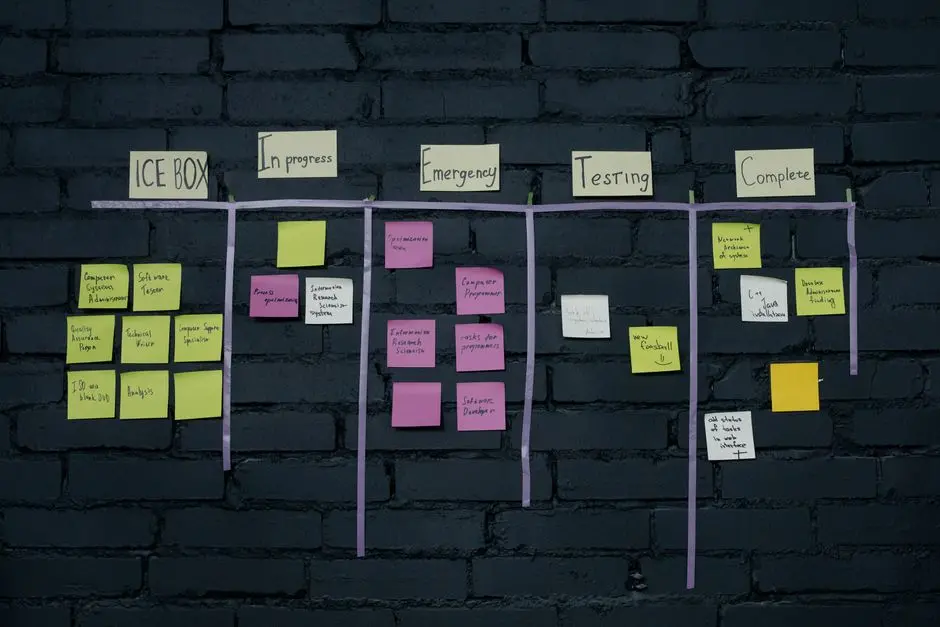
Unlock peak performance and sustained innovation within your Ruby development operations. This resource penetrates the core of effective agile workflows, specifically engineered for Rails-centric teams. We confront the challenges of modern software delivery, moving beyond theoretical frameworks to present actionable strategies for implementing robust sprints and critical code review mechanisms. Neglecting these foundational pillars invites project delays, quality degradation, and team misalignment – unacceptable outcomes in today’s competitive landscape.
We dissect the strategic imperative of agile, demonstrating its power to transform iterative development into a continuous stream of value. Equip your team with the insights to navigate complex projects, amplify collaboration, and relentlessly elevate code quality. This guide provides the tactical blueprint to build resilient, high-performing Ruby teams capable of delivering exceptional software with predictable rhythm and uncompromising standards. Equipping oneself with these advanced engineering methodologies is paramount for a thriving career growth and advanced engineering within the Ruby ecosystem, ensuring a leading edge in professional development.
Forge Agile Sprints: Architecting Ruby Development Cycles
We initiate the agile transformation by forging a robust sprint foundation. This involves more than simply adopting a calendar; it demands a strategic re-architecture of how Ruby teams conceive, execute, and deliver value. Sprints, typically lasting one to two weeks, serve as our rhythmic pulse, driving predictable iterations. We commence with meticulous Sprint Planning, a critical ceremony where the team commits to a set of features from the product backlog. This commitment is not arbitrary; it's a calculated projection based on team velocity, ensuring realistic goals and avoiding over-commitment – a common pitfall.
Effective sprint planning dictates clear User Stories, each defined with acceptance criteria. We utilize tools like Jira or Trello to manage this backlog, ensuring transparency and traceability. The definition of "Done" is paramount here; it must be a shared, unambiguous understanding across the entire team. A "Done" story typically implies coded, tested, reviewed, and ready for deployment. Neglecting a precise definition leads to scope creep and quality debt, sabotaging the sprint's integrity. Furthermore, we activate Backlog Refinement throughout the sprint, a continuous process of grooming future stories, adding detail, and estimating complexity. This proactive approach prevents bottlenecks and ensures the team always has a ready stream of well-defined work, fueling uninterrupted development flow. Implementing this structure empowers Ruby teams to achieve consistent delivery and maintain high product quality.
# Gemfile for common development/testing tools
# We recommend isolating test-specific gems in a :development, :test group.
# For example, RSpec and FactoryBot are essential for robust testing.

# Gemfile

group :development, :test do
  gem 'rspec-rails', '~> 6.0'
  gem 'factory_bot_rails', '~> 6.2'
  gem 'faker', '~> 2.20' # For generating realistic test data
  gem 'capybara', '~> 3.39' # For feature testing
  gem 'selenium-webdriver', '~> 4.10' # For browser automation with Capybara
  gem 'webdrivers', '~> 5.2' # Automatically download webdriver binaries
  gem 'simplecov', require: false # Code coverage reports
end

# Rake task for basic sprint overview setup (conceptual)
# You might integrate this with your project management tool's API

# lib/tasks/sprint_tasks.rake

namespace :sprint do
  desc "Initializes a new sprint and sets up basic reporting."
  task :init, [:sprint_number, :start_date, :end_date] do |t, args|
    unless args[:sprint_number] && args[:start_date] && args[:end_date]
      puts "Usage: rake sprint:init[sprint_number,start_date,end_date]"
      exit 1
    end

    puts "Activating Sprint #{args[:sprint_number]} from #{args[:start_date]} to #{args[:end_date]}"
    # In a real scenario, this would interact with Jira/Trello/Asana APIs
    # or update an internal sprint tracking mechanism.
    # Example: Create a new sprint board, set sprint dates, notify team.
    puts "Placeholder for API calls to create sprint and generate initial reports."
    puts "Reporting setup complete for Sprint #{args[:sprint_number]}."
  end

  desc "Generates a daily sprint progress report."
  task :daily_report do
    puts "Decoding daily sprint progress..."
    # This would pull data from your issue tracker (e.g., tickets completed, blockers).
    # Example: Query Jira for all active tickets in the current sprint.
    puts "Tickets completed: X, Tickets remaining: Y, Blockers: Z."
    puts "Report generated at #{Time.now}."
  end
end
Engineer Code Excellence: Integrating Robust Review Processes
We engineer code excellence by integrating robust code review processes, a non-negotiable component of high-quality Ruby development. Code reviews serve as a critical quality gate, ensuring adherence to coding standards, architectural consistency, and the detection of logical flaws or security vulnerabilities before they propagate. Our approach emphasizes both formal and informal review methodologies. Pair Programming, for instance, offers real-time review, fostering knowledge transfer and immediate feedback. For asynchronous reviews, we leverage platforms like GitHub or GitLab's Pull Request (PR) mechanism, mandating at least two approvals for feature branches before merging to main.
We activate tooling to streamline and standardize this process. RuboCop acts as our static code analyzer, enforcing a consistent style guide and flagging potential issues automatically. Its integration into CI/CD pipelines ensures every commit adheres to predefined standards, reducing cognitive load during human reviews. Furthermore, Danger is deployed to automate project-specific checks within the PR workflow. Danger scripts can verify PR descriptions, enforce conventional commit messages, identify large changes, or even remind reviewers about specific considerations. This blend of human expertise and automated gatekeeping elevates code quality, reduces technical debt, and cultivates a collective ownership mentality within the Ruby team. We transform code review from a chore into a powerful lever for continuous improvement and shared mastery.
# Example .rubocop.yml for Rails-centric Ruby teams
# We recommend a strict but reasonable set of cops to enforce consistency and quality.

# .rubocop.yml

require: # Load community extensions if desired
  - rubocop-rails
  - rubocop-performance
  - rubocop-rspec

AllCops:
  TargetRubyVersion: 3.2 # Adjust to your project's Ruby version
  NewCops: enable # Always enable new cops for future compatibility
  Exclude:
    - 'bin/**/*'
    - 'db/schema.rb'
    - 'vendor/**/*'
    - 'node_modules/**/*'
    - 'config/environments/**/*'
    - 'config/initializers/**/*'
    - 'lib/tasks/**/*' # Exclude Rake tasks if they don't follow standard Ruby style

# Core Ruby Style guidelines
Style/FrozenStringLiteralComment:
  Enabled: true # Promote immutability
Style/Documentation:
  Enabled: false # Often too verbose for internal app code
Style/StringLiterals:
  EnforcedStyle: single_quotes
Style/ClassAndModuleChildren:
  EnforcedStyle: compact # e.g., class MyClass; class NestedClass; end; end

# Rails-specific guidelines
Rails/CreateTableWithTimestamps:
  Enabled: true # Ensure all tables have timestamps
Rails/HasAndBelongsToMany:
  Enabled: false # Prefer has_many :through for clearer relationships
Rails/HttpStatus:
  EnforcedStyle: symbolic # Use symbols like :ok instead of 200

# Performance optimizations
Performance/FlatMapWithIndex:
  Enabled: true
Performance/Sum:
  Enabled: true

# RSpec-specific guidelines
RSpec/DescribeClass:
  Enabled: true
RSpec/ExampleLength:
  Max: 10 # Keep examples concise

# Example Dangerfile for automated code review checks
# We leverage Danger to enforce project-specific rules directly in the PR flow.

# Dangerfile

# Ensure the PR description is not empty
if github.pr_body.length < 10
  warn("Please provide a more descriptive pull request body.")
end

# Check if the title starts with a conventional commit prefix (e.g., 'feat:', 'fix:')
unless github.pr_title.match?(/^(feat|fix|docs|style|refactor|perf|test|build|ci|chore|revert):/)
  fail("PR title must follow Conventional Commits spec (e.g., 'feat: Add new feature').")
end

# Mandate minimum number of reviewers
if github.requested_reviewers.count < 2
  warn("Consider adding more reviewers for critical changes.")
end

# Detect if new migrations were added without a corresponding test or note
new_migrations = git.modified_files.select { |f| f.include?("db/migrate") }
if new_migrations.any?
  message("New database migrations detected. Ensure they are reversible and tested.")
end

# Check for uncommitted debuggers (e.g., 'binding.pry')
modified_ruby_files = git.modified_files.select { |f| f.end_with?('.rb') }
modified_ruby_files.each do |file|
  file_content = File.read(file)
  if file_content.include?('binding.pry') || file_content.include?('byebug')
    fail("Found debugging statements (binding.pry/byebug) in #{file}. Please remove before merging.")
  end
end

# Ensure dependencies are updated (Gemfile.lock change)
if git.modified_files.include?('Gemfile.lock')
  message("Gemfile.lock modified. Remember to run `bundle install` and commit if necessary.")
end

# Run RuboCop automatically on changed Ruby files
puts "Running RuboCop on changed Ruby files..."
sh("bundle exec rubocop --format github --force-exclusion")
Activate Iteration Flow: Mastering Stand-ups and Retrospectives
We activate an uninterrupted iteration flow by mastering the core agile ceremonies: daily stand-ups and sprint retrospectives. These are not mere meetings; they are strategic synchronization points designed to amplify team cohesion and continuous improvement. The Daily Stand-up, a brief 15-minute encounter, is a high-bandwidth communication channel. Each Ruby developer articulates three points: what they accomplished yesterday, what they plan to achieve today, and any impediments blocking their progress. This structure fosters collective awareness, allows for rapid problem identification, and promotes self-organization. We enforce strict timeboxing and a "no problem-solving in the stand-up" rule; discussions on blockers are deferred to separate, focused sessions, ensuring the stand-up remains lean and efficient.
Equally critical is the Sprint Retrospective, conducted at the close of each sprint. This is our dedicated forum for introspective analysis and strategic adjustment. The team collectively explores: what went well, what could be improved, and specific action items to implement in the next sprint. We encourage candid feedback in a blame-free environment, leveraging techniques like the "Start, Stop, Continue" model. Data points, such as sprint velocity, burndown charts, and quality metrics, inform these discussions. We transform insights into concrete, measurable actions, which are then integrated into the next sprint's planning. This relentless commitment to iterative self-correction decodes hidden inefficiencies and propels the Ruby team toward an ever-higher state of operational excellence.
# No direct Ruby code for stand-ups/retrospectives, but conceptual setup for tracking.
# This illustrates integrating with a project management tool using a simple Rake task.

# lib/tasks/meeting_tasks.rake

namespace :meeting do
  desc "Logs a daily stand-up entry for reporting purposes."
  task :log_standup, [:team_member, :yesterday, :today, :blockers] do |t, args|
    unless args[:team_member] && args[:yesterday] && args[:today]
      puts "Usage: rake meeting:log_standup[team_member,yesterday,today,blockers]"
      exit 1
    end

    puts "Logging stand-up for #{args[:team_member]}..."
    puts "  Yesterday: #{args[:yesterday]}"
    puts "  Today: #{args[:today]}"
    puts "  Blockers: #{args[:blockers] || 'None'}"
    # In a real system, this would push data to a central reporting database
    # or a dedicated stand-up logging tool.
    puts "Stand-up data recorded."
  end

  desc "Prepares the retrospective board (conceptual)."
  task :prepare_retro do
    puts "Activating retrospective preparation..."
    puts "  1. Reviewing Sprint Metrics (velocity, burndown)."
    puts "  2. Setting up collaborative board (e.g., Miro, Trello, Confluence)."
    puts "  3. Notifying team for input on What Went Well, What Could Be Improved, Action Items."
    puts "Retrospective board ready for input."
  end
end
Deploy with Precision: Orchestrating Continuous Delivery for Rails
We deploy with precision, orchestrating a robust Continuous Delivery (CD) pipeline for our Rails applications, transforming development efforts into tangible, deployable increments. This final stage of our agile workflow integrates automated testing, build processes, and deployment strategies to ensure a seamless, high-velocity release cycle. We commence by establishing a strong Continuous Integration (CI) foundation, where every code commit automatically triggers a battery of tests – unit, integration, and system tests – along with static code analysis using tools like RuboCop. Platforms such as GitHub Actions, GitLab CI, or CircleCI are instrumental in automating these checks, providing immediate feedback on code quality and correctness. A failing build signals an immediate halt, preventing faulty code from progressing.
Once CI passes, we activate the Continuous Deployment phase. This involves automatically deploying verified code to a staging environment, mirroring production conditions. This enables thorough user acceptance testing (UAT) and stakeholder review. For Ruby on Rails, tools like Capistrano, Kamal, or even custom deployment scripts facilitate this process. The goal is to make deployments routine, low-risk, and ideally, entirely automated. We embed comprehensive monitoring and alerting into our deployed applications using services like New Relic, Datadog, or Sentry. This closes the feedback loop, providing real-time insights into application performance and error rates in production. This precision deployment strategy minimizes downtime, accelerates time-to-market, and guarantees that our Ruby teams consistently deliver stable, high-quality software, conquering the deployment frontier with confidence and control.
# Example GitHub Actions workflow for a Rails application
# This workflow automates testing and deployment (to a staging environment).

# .github/workflows/ci_cd.yml

name: Ruby on Rails CI/CD

on:
  push:
    branches:
      - main
      - develop
  pull_request:
    branches:
      - main
      - develop

jobs:
  build:
    runs-on: ubuntu-latest
    container:
      image: ruby:3.2.2 # Specify your Ruby version
      services:
        postgres:
          image: postgres:13
          env:
            POSTGRES_DB: rails_test
            POSTGRES_USER: runner
            POSTGRES_PASSWORD: ''
          ports:
            - 5432:5432
          options: >- # Health check for PostgreSQL
            --health-cmd pg_isready
            --health-interval 10s
            --health-timeout 5s
            --health-retries 5
    env:
      RAILS_ENV: test
      DATABASE_URL: 'postgresql://runner:@localhost:5432/rails_test'

    steps:
    - name: Checkout code
      uses: actions/checkout@v3

    - name: Install dependencies
      run: |
        gem install bundler -v '~> 2.4'
        bundle install --jobs 4 --retry 3 # Optimize bundle install

    - name: Set up database
      run: |
        bundle exec rails db:create
        bundle exec rails db:migrate

    - name: Run RSpec tests
      run: bundle exec rspec

    - name: Run RuboCop
      run: bundle exec rubocop --parallel

  deploy_staging:
    needs: build # This job depends on the 'build' job completing successfully
    runs-on: ubuntu-latest
    if: github.ref == 'refs/heads/main' # Only deploy main branch to staging
    environment: staging # Designate a GitHub Environments for secrets management
    steps:
    - name: Checkout code
      uses: actions/checkout@v3

    - name: Deploy to Staging
      env:
        SSH_PRIVATE_KEY: ${{ secrets.SSH_PRIVATE_KEY }} # Store SSH key in GitHub Secrets
        DEPLOY_HOST: ${{ secrets.STAGING_HOST }}
        DEPLOY_USER: ${{ secrets.STAGING_USER }}
      run: |
        mkdir -p ~/.ssh
        echo "$SSH_PRIVATE_KEY" > ~/.ssh/id_rsa
        chmod 600 ~/.ssh/id_rsa
        ssh-keyscan -H $DEPLOY_HOST >> ~/.ssh/known_hosts
        # Example Capistrano deployment command (or similar for other tools like Kamal, Mina)
        ssh $DEPLOY_USER@$DEPLOY_HOST "cd /var/www/your_app && bundle exec cap staging deploy"
        echo "Deployment to staging initiated."
Key Takeaways
Sprint Foundation & Planning
Forge a robust sprint rhythm: Typically 1-2 weeks.
Sprint Planning: Commit to realistic goals based on team velocity.
Define "Done": Unambiguous criteria (coded, tested, reviewed, deployable).
Backlog Refinement: Continuous grooming of future stories.
Tools: Jira, Trello for backlog management.
Code Review Excellence & Automation
Purpose: Quality gate for standards, architecture, logic, security.
Methods: Pair Programming (real-time), Async Reviews (PRs, require 2 approvals).
Tooling: RuboCop for static analysis/style; Danger for automated PR checks (e.g., title, description, debuggers).
Goal: Reduce technical debt, foster shared ownership, elevate quality.
Iteration Flow & Continuous Improvement
Daily Stand-ups: 15-min, 3 points (yesterday, today, blockers). No problem-solving; defer discussions.
Sprint Retrospective: End-of-sprint analysis (what went well, what to improve, action items).
Data-driven: Use velocity, burndown charts, quality metrics.
Principle: Relentless self-correction and continuous learning.
Continuous Delivery & Feedback Loop
Continuous Integration (CI): Automated tests (unit, integration, system) and static analysis on every commit.
Continuous Deployment (CD): Automate deployment to staging environments.
Tools: GitHub Actions, GitLab CI for CI/CD; Capistrano, Kamal for deployment.
Monitoring: Integrate tools (New Relic, Datadog) for real-time production feedback.
Outcome: Seamless, low-risk releases; accelerated time-to-market.
FAQ
-
How do we best define 'Done' for a Ruby user story?
Defining 'Done' involves establishing a clear, measurable set of criteria that all team members understand and agree upon. For a Ruby user story in a Rails environment, this typically includes:
- Code Complete: All necessary code has been written and committed.
- Unit Tested: Comprehensive unit tests exist and pass.
- Integration Tested: The feature integrates correctly with other parts of the application.
- Acceptance Criteria Met: All business requirements outlined in the user story are satisfied and verified.
- Code Reviewed: The code has passed a peer review and any feedback has been addressed.
- Documentation Updated: Relevant documentation (e.g., API docs, README) is up-to-date.
- Deployed to Staging: The feature is successfully deployed to a staging environment and tested there.
Each team must forge its own definition, but the core principle is to ensure the increment is shippable and fully validated.
-
What are common pitfalls during sprint planning in Ruby teams and how can we avoid them?
Common pitfalls during sprint planning include:
- Over-commitment: The team pulls too many stories, leading to unfinished work and demoralization. Avoidance: Base commitments on historical velocity and actively involve the entire team in estimation.
- Lack of Story Definition: Vague user stories with unclear acceptance criteria. Avoidance: Prioritize backlog refinement, ensuring stories are SMART (Specific, Measurable, Achievable, Relevant, Time-bound).
- Ignoring Technical Debt: Focus solely on new features, neglecting refactoring or bug fixes. Avoidance: Allocate a percentage of each sprint (e.g., 10-20%) for technical debt and maintenance.
- External Interruptions: Stakeholders directly assigning work mid-sprint. Avoidance: Protect the sprint backlog from external interference; route all new requests through the Product Owner.
We must cultivate a culture of realistic planning and relentless protection of the sprint's integrity.
-
How can we make code reviews more efficient and less of a bottleneck for Ruby teams?
Optimize code review efficiency by:
- Keep PRs Small: Larger PRs are harder and slower to review. Encourage frequent, small commits.
- Automate Checks: Integrate tools like RuboCop, Brakeman, and Danger into your CI pipeline to catch stylistic, security, and basic logical errors automatically.
- Clear PR Descriptions: Mandate detailed PR descriptions explaining the 'why' behind changes, not just 'what'.
- Pair Programming: For complex features, pair programming provides real-time review and reduces post-PR review time.
- Reviewer Rotation: Distribute review load to avoid burnout and broaden knowledge sharing.
- Timeboxing: Encourage reviewers to allocate specific, short blocks of time for reviews, rather than letting them pile up.
- Focus on Logic, Not Style: Rely on automated linters for style; reviewers should focus on architectural implications, performance, security, and business logic.
The goal is to transform reviews into a continuous improvement loop, not a bureaucratic hurdle.
-
What role does continuous feedback play in an agile Ruby workflow, beyond retrospectives?
Continuous feedback extends beyond formal retrospectives and permeates every aspect of an agile Ruby workflow:
- CI/CD Pipelines: Immediate feedback on code quality and functionality from automated tests and static analysis.
- Monitoring & Alerting: Real-time feedback from production systems on performance, errors, and user behavior.
- User Acceptance Testing (UAT): Direct feedback from stakeholders and end-users on staging environments.
- One-on-One Discussions: Regular, informal feedback between team members and managers about performance, challenges, and growth.
- Code Review Comments: Direct, actionable feedback on specific code changes.
We cultivate an environment where feedback is constant, constructive, and actively sought, accelerating learning and adaptation. This forms a powerful loop that drives the Ruby team towards sustained mastery and innovation.