
Engineer Ruby's Future: Decode Market Demand, Job Prospects, and Language Evolution
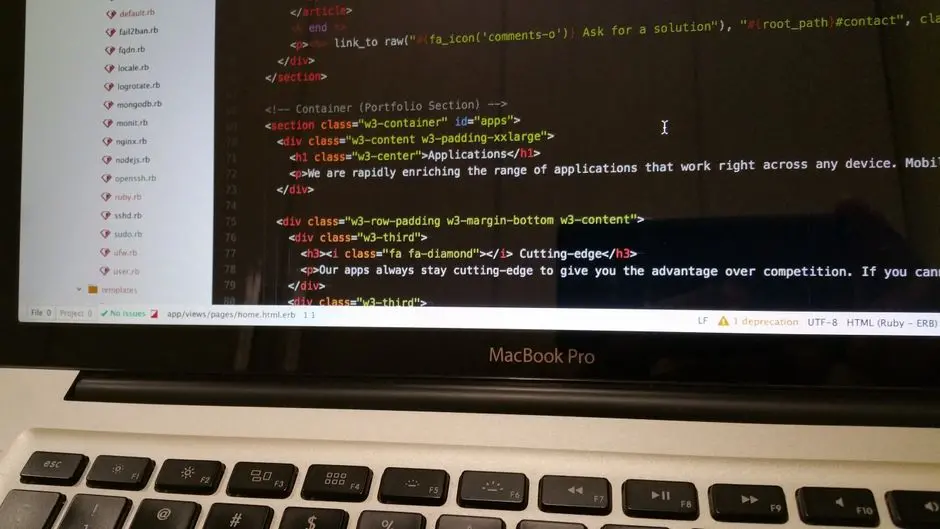
A critical question frequently surfaces in the dynamic landscape of software development: "Is Ruby still worth learning?" This query extends beyond mere curiosity; it challenges the strategic allocation of time and resources for aspiring and seasoned developers alike. We embark on a surgical analysis to dissect the current market demand for Ruby developers, illuminate the landscape of job availability, and project the language's future trajectory. Our exploration activates core insights into why Ruby, a language celebrated for its developer productivity and elegant syntax, continues to forge significant impact across various industry sectors.
We transcend surface-level narratives, leveraging data-driven perspectives and expert observations to construct a clear, actionable understanding of Ruby’s enduring value. This resource empowers you to make informed decisions about your engineering path, revealing the specific niches where Ruby expertise delivers maximum leverage. Prepare to confront prevailing myths, uncover latent opportunities, and understand the critical factors that continue fueling growth in advanced engineering within the Ruby ecosystem. We navigate this frontier with precision, transforming complex market dynamics into a comprehensive strategy for your professional development.
Forge Ruby's Core Strengths: Current Market Demand and Enduring Value
We decode Ruby's persistent relevance by examining its foundational strengths and current market positioning. While some narratives suggest a decline in popularity, a surgical analysis reveals Ruby’s robust presence in specific, high-value sectors. Companies prioritize rapid development cycles and maintainable codebases consistently turn to Ruby on Rails. Forge an understanding that Ruby, with its emphasis on developer happiness and productivity, enables teams to activate solutions faster than many alternatives. This translates directly into a compelling business advantage for startups scaling rapidly and established enterprises optimizing their time-to-market. The language’s inherent elegance and the Rails framework’s convention-over-configuration philosophy streamline development workflows, reducing overhead and accelerating feature delivery.
The market for Ruby skills now gravitates towards experienced professionals who can leverage the language's power for complex, mission-critical applications. Major players like Shopify, GitHub, and Airbnb continue to operate vast, successful platforms built on Ruby, demonstrating its capacity for enterprise-grade scalability and resilience. We observe a market that values depth over breadth; mastering Ruby's metaprogramming capabilities, its elegant DSLs, and its object-oriented paradigms unlocks advanced engineering roles. This segment of the market demands not just coding, but architectural insight and a profound grasp of the framework's intricacies, including performance optimization, database management, and robust API design. We identify Ruby as a strategic asset for projects requiring a blend of agility, maintainability, and a superior developer experience, positioning it as a tool for craftsmanship rather than mere utility.
Navigate the Ruby Job Frontier: Opportunities and Niche Specializations
The Ruby job market demands a strategic approach; it is not a broad-acre field but a series of specialized, lucrative frontiers. We observe a concentrated demand for senior Ruby developers, full-stack engineers proficient in Rails and modern front-end frameworks, and experts in specific domain areas leveraging Ruby’s ecosystem. Companies actively recruit professionals capable of owning significant portions of an application, from architectural design to deployment, demonstrating a comprehensive understanding of the entire software lifecycle. Forge your path by targeting roles in rapidly growing SaaS companies, e-commerce platforms, and digital agencies that prioritize efficient backend development and robust system integration. The emphasis shifts from entry-level positions to those requiring substantial experience and a proven track record.
Success in this landscape mandates more than just Ruby syntax; it requires a robust toolkit. We advocate for optimizing your skill set with complementary technologies: mastery of JavaScript frameworks like React or Vue, proficiency in cloud platforms such as AWS, Google Cloud, or Azure, and familiarity with containerization tools like Docker and Kubernetes. Furthermore, a deep understanding of database technologies (PostgreSQL, Redis) and API design principles, including RESTful and GraphQL approaches, is paramount. We instruct developers to cultivate a portfolio showcasing complex problem-solving, performance optimizations, and clean, maintainable code, rather than simply demonstrating basic functionality. This strategic alignment of skills and demonstrable project work activates opportunities within a high-demand, high-reward segment of the engineering profession. The included code example illustrates a common backend processing pattern using Ruby, emphasizing clear object-oriented design and decisive state management—skills highly valued in the Ruby job market.
class OrderProcessor
  def initialize(order_id, repository)
    @order_id = order_id
    @repository = repository
  end

  # Process an order, demonstrating a common backend task
  def process_order
    order = @repository.find_order(@order_id)
    return false unless order # Guard clause for missing order

    # Simulate complex order processing logic
    if order.status == 'pending'
      # Activate payment gateway interaction
      # Update inventory, log events, etc.
      order.status = 'processed' # Decisive state change
      @repository.save_order(order)
      puts "Order ##{@order_id} processed successfully."
      true
    else
      puts "Order ##{@order_id} cannot be processed (current status: #{order.status})."
      false
    end
  end
end

# Example usage (simplified repository for demonstration)
require 'ostruct'

class OrderRepository
  def initialize
    # In a real application, this would interact with a database
    @orders = {
      1 => OpenStruct.new(id: 1, status: 'pending', total: 100.0),
      2 => OpenStruct.new(id: 2, status: 'processed', total: 50.0)
    }
  end

  def find_order(id)
    @orders[id]
  end

  def save_order(order)
    @orders[order.id] = order
    true
  end
end

repository = OrderRepository.new

processor_1 = OrderProcessor.new(1, repository)
processor_1.process_order # Output: Order #1 processed successfully.

processor_2 = OrderProcessor.new(2, repository)
processor_2.process_order # Output: Order #2 cannot be processed (current status: processed).
Engineer Ruby's Evolution: Performance, Innovation, and Ecosystem
We activate an understanding of Ruby's continuous evolution, a critical factor in its long-term viability. The language is not static; recent Ruby 3.x versions, including the ongoing development of Ruby 3.3 and beyond, underscore a relentless commitment to performance enhancements and modern language features. Forge ahead with knowledge of advancements like JIT compilation for substantial speedups, Ractors for safe, concurrent execution by isolating objects, and Fibers for efficient parallelism, particularly useful in I/O-bound applications. These innovations directly address past criticisms regarding Ruby's speed, positioning it as a highly capable contender for demanding workloads and large-scale systems. We recognize the dedication of the Ruby core team to optimize the language’s engine, ensuring its competitive edge in a performance-driven development world.
Beyond performance, Ruby's ecosystem flourishes with innovation, extending its utility across diverse domains. While Ruby on Rails remains a dominant force for full-stack web applications, projects like Hanami and Dry-rb offer alternative architectural paradigms for building robust applications with a focus on functional programming and explicit dependencies, catering to specific design preferences. Sidekiq continues to engineer efficient background job processing, handling millions of asynchronous tasks daily, and various gems extend Ruby's capabilities across data science, DevOps, and more. The vibrant, supportive community actively contributes to the language's development and ecosystem, ensuring Ruby adapts to new challenges and maintains its relevance through continuous improvement. The included code snippet demonstrates Ruby 3.x's powerful pattern matching feature, illustrating how the language evolves to provide more declarative and concise ways to handle complex data structures, enhancing both readability and maintainability—key aspects of professional Ruby development.
class DocumentProcessor
  # Example of pattern matching in Ruby 3.x for declarative logic
  def process_content(data)
    case data
    in {type: 'text', content: String => text_content} then
      puts "Processing text document: '#{text_content[0..20]}...'"
      text_content.upcase # Optimize for specific text processing, e.g., normalization
    in {type: 'image', url: String => image_url, dimensions: {width:, height:}} then
      puts "Processing image from URL: #{image_url} (dimensions: #{width}x#{height})"
      "Processed image: #{image_url}" # Return a summary string
    in {type: 'video', url: String => video_url, duration: Integer => video_duration} if video_duration > 60 then
      puts "Processing long video from URL: #{video_url} (duration: #{video_duration}s)"
      "Processed long video: #{video_url}"
    in {type: 'unknown', **rest} then
      puts "Unknown document type encountered. Data: #{rest}"
      nil # Handle gracefully by returning nil
    else
      puts "Invalid data format provided: #{data}"
      nil
    end
  end
end

processor = DocumentProcessor.new

# Activate diverse processing scenarios with pattern matching
puts processor.process_content(type: 'text', content: 'Ruby 3.x introduces powerful new features like pattern matching, enhancing code readability and maintainability.')
puts processor.process_content(type: 'image', url: 'https://example.com/pic.jpg', dimensions: {width: 800, height: 600})
puts processor.process_content(type: 'video', url: 'https://example.com/long_video.mp4', duration: 120)
puts processor.process_content(type: 'video', url: 'https://example.com/short_video.mp4', duration: 30) # This will fall through to 'else' due to the 'if' guard
puts processor.process_content(type: 'unknown', data: 'arbitrary payload')
puts processor.process_content('simple_string') # This will fall through to 'else' as it does not match any pattern
Activate Strategic Investment: Decoding Ruby's Long-Term Engineering Value
We activate a strategic perspective on investing in Ruby expertise, transcending transient trends to decode its long-term engineering value. Companies choose Ruby not merely for its features but for the entire development paradigm it fosters: high developer satisfaction, rapid iteration, and the ability to maintain complex systems with surprising clarity. Forge an understanding that the 'cost of ownership' for Ruby applications can often be lower than for verbose alternatives, due to reduced development time and fewer lines of code, which in turn means less surface area for bugs and easier refactoring. This financial leverage represents a compelling argument for Ruby's continued adoption in specific business contexts where agility and rapid adaptation to market feedback are paramount. It empowers teams to prioritize product innovation over wrestling with language complexities.
Mastering Ruby’s unique paradigms – its deep object orientation, expressive metaprogramming, and intuitive DSL capabilities – cultivates a higher level of programming literacy that transcends language boundaries. Developers who truly understand Ruby often exhibit a deeper appreciation for clean architecture, elegant problem-solving, and efficient system design, skills that are universally applicable. We encourage developers to view Ruby as a powerful intellectual gymnasium, honing skills that are transferable and highly valued across the entire software engineering spectrum. By investing in Ruby, we invest in a development philosophy that optimizes for human productivity and system clarity, ensuring that our contributions remain impactful and resilient against the ever-shifting tides of technology. We engineer a future where well-crafted Ruby applications continue to deliver substantial business value and drive innovation, making it a wise and enduring career investment.
Key Takeaways
Ruby's Enduring Market Presence
Ruby maintains a strong foothold in high-value niches such as rapid prototyping, SaaS, and e-commerce. Its core strengths include unparalleled developer productivity, elegant syntax, and robust frameworks like Ruby on Rails. The market consistently values experienced Ruby professionals for their ability to deliver complex, maintainable, and scalable applications efficiently, demonstrating a critical business advantage.
Strategic Job Market Navigation
The Ruby job market primarily favors senior backend and full-stack developers. Success hinges on combining Ruby/Rails expertise with essential complementary skills in modern frontend frameworks (React/Vue), cloud platforms (AWS/GCP), containerization (Docker/Kubernetes), and database management (PostgreSQL). Demonstrating comprehensive project ownership and clean code practices is paramount for securing high-value roles.
Continuous Language Evolution
Ruby is an actively evolving language, with recent 3.x versions introducing significant performance enhancements (JIT, Ractors, Fibers) and modern features (pattern matching). This ongoing development by the Ruby core team ensures its competitive edge in a performance-driven landscape. The broader ecosystem, including frameworks beyond Rails, continually innovates to meet diverse development needs.
Long-Term Value Proposition
Investing in Ruby expertise offers profound long-term value through high developer satisfaction, rapid iteration capabilities, and a lower overall cost of ownership for applications. Mastery of Ruby's unique paradigms cultivates advanced programming literacy, fostering skills in clean architecture, elegant problem-solving, and efficient system design that are highly transferable across the entire software engineering spectrum, securing a resilient career trajectory.
FAQ
-
Does Ruby have a future in modern web development?
Absolutely. Ruby continues to be a powerful, productive choice for web development, especially for applications prioritizing rapid iteration, elegant code, and a clean, maintainable codebase. Major platforms like Shopify demonstrate Ruby's capacity for scalable, high-traffic systems. Its future is secured by ongoing performance enhancements in Ruby 3.x, a vibrant community, and its proven ability to facilitate rapid business innovation.
-
What kind of jobs are available for Ruby developers today?
The market primarily seeks experienced Ruby and Ruby on Rails developers for senior backend and full-stack roles. Opportunities exist in SaaS companies, e-commerce, and startups needing to build applications quickly and efficiently. Roles often require complementary skills in cloud computing, modern frontend frameworks, and robust database management, along with strong architectural understanding.
-
Is Ruby still good for new projects and startups?
Yes, Ruby on Rails remains an excellent choice for startups and new projects due to its convention-over-configuration philosophy, which enables incredibly fast development cycles. This allows businesses to launch and iterate rapidly, validate ideas, and achieve product-market fit with exceptional efficiency and reduced time-to-market. Its rich ecosystem and extensive libraries provide a robust foundation for growth.
-
How does Ruby's performance compare to other languages now?
Recent versions of Ruby (3.x) have made significant strides in performance with features like JIT compilation, Ractors, and Fibers, substantially narrowing the gap with other languages. While it may not always match the raw CPU-bound speed of languages like Go or Rust, its exceptional developer productivity often offsets minor performance differences, especially for I/O-bound web applications. The focus is on optimized throughput, efficient resource utilization, and maintaining a superior developer experience.
-
What are the key skills to combine with Ruby for maximum employability?
To maximize employability, combine Ruby/Rails expertise with modern JavaScript frameworks (React, Vue, Angular), proficiency in cloud platforms (AWS, GCP, Azure), containerization (Docker, Kubernetes), and database administration/optimization (PostgreSQL, Redis). Strong understanding of API design (REST, GraphQL), testing methodologies, and DevOps principles further enhances market value, positioning you as a comprehensive engineering asset.