
Deconstruct Legacy Ruby: A Strategic Refactoring Blueprint
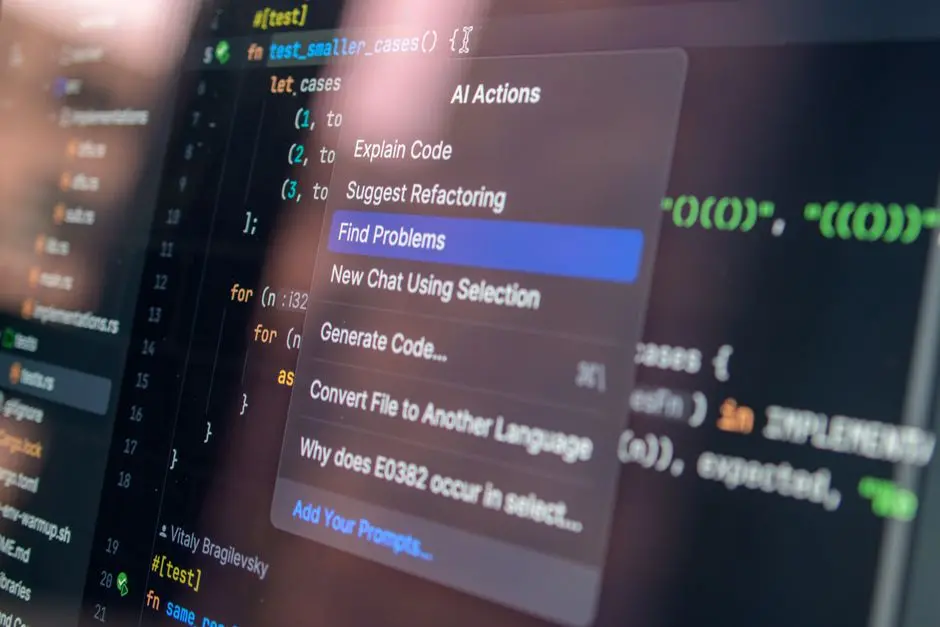
Venture into the heart of legacy Ruby codebases, where the weight of technical debt often stifles innovation and obstructs progress. We confront the intricate challenge of transforming 'smelly' code into a robust, maintainable asset without compromising existing functionalities. This resource engineers a precise roadmap for developers grappling with aging Ruby applications, offering potent, battle-tested strategies to initiate and sustain meaningful refactoring efforts.
Unlock the power to revitalize your codebase, ensuring every modification enhances clarity, boosts performance, and simplifies future development. We decode the complex interplay of risks and rewards inherent in refactoring, providing a framework for safe, incremental improvements. Mastering these techniques is not merely about tidying code; it fundamentally transforms your approach to software longevity and team productivity. This strategic overhaul directly contributes to
optimizing the Ruby development workflow and environment, activating a culture of continuous improvement that propels projects forward. Prepare to forge a cleaner, more efficient Ruby future.
Diagnose the Decay: Identifying Refactoring Hotspots
Before we wield the refactoring scalpel, we must precisely locate the areas demanding attention. Initiate a rigorous diagnostic phase to map the codebase's 'smells' and technical debt. Focus on metrics that reveal complexity, duplication, and coupling. Tools like RuboCop, Reek, and Flog provide invaluable automated insights into code quality, highlighting methods that are too long, classes with too many responsibilities, or excessive cyclomatic complexity. We leverage these static analysis tools to generate an objective baseline, identifying the riskiest and most rewarding areas for intervention. Consider a methodical traversal of your codebase, prioritizing modules with high change frequency and low test coverage. High churn in untested, complex code represents critical refactoring hotspots. Develop a shared understanding within your team regarding what constitutes a 'smell' and establish clear criteria for prioritization, ensuring every refactoring effort targets maximum impact with minimal disruption. This foundational diagnostic step empowers informed decision-making, transforming vague feelings of unease into actionable refactoring targets.
Key Metrics to Monitor:
- Cyclomatic Complexity: Indicates the number of independent paths through a method, directly correlating with test effort and potential for bugs.
- Method Length: Excessively long methods often violate the Single Responsibility Principle and are harder to understand and test.
- Duplication: Identifies repetitive code segments, signaling opportunities for abstraction.
- Coupling: Measures dependencies between modules; high coupling makes changes ripple unpredictably.
- Test Coverage: Pinpoints areas lacking automated safety nets, critical before any refactoring.
Fortify Your Foundation: The Safety Net Strategy
Refactoring legacy code without a robust safety net invites disaster. Our paramount strategy involves establishing an impenetrable shield of automated tests before touching a single line of production code. Unit tests, integration tests, and even characterization tests (also known as golden master tests) serve as critical guardians of existing functionality. We commit to a test-first approach for targeted refactoring: write a failing test for the new behavior (if applicable), or, more commonly, write comprehensive tests that pass for the current, 'smelly' implementation. These tests lock down the behavior, ensuring that subsequent changes do not inadvertently introduce regressions. Version control, specifically Git, becomes our indispensable partner. Every refactoring step, no matter how small, merits its own commit. This granular commit history provides an immediate rollback point, minimizing risk and facilitating precise tracking of changes. Execute refactoring in tiny, atomic steps, running the test suite after each micro-change. This iterative process validates every modification, preventing compounding errors and maintaining code stability. A robust test suite combined with disciplined version control empowers us to move with confidence, knowing we can revert if a change introduces an unexpected breakage.
The Safety Net Pillars:
- Comprehensive Test Coverage: Guarantee that all critical paths and edge cases are covered by automated tests. Focus on covering the behavior, not just the implementation.
- Small, Atomic Commits: Each logical change constitutes a single commit. This makes review easier and allows for precise reverts.
- Frequent Test Execution: Run the full test suite after every minor change to detect regressions immediately.
- Characterization Tests: For truly opaque legacy code, these tests capture current behavior by observing output, providing a safety net when internal structure is unknown.
- Continuous Integration: Integrate automated testing into a CI pipeline to ensure all changes pass tests before merging to main branches.
# frozen_string_literal: true

require 'rspec'

# Original class with 'smelly' method
class LegacyCalculator
  def calculate_discounted_price(item_price, quantity, customer_type)
    total_price = item_price * quantity

    discount_rate = 0
    case customer_type
    when :premium
      discount_rate = 0.15 # 15% discount
    when :loyal
      discount_rate = 0.10 # 10% discount
    when :new
      discount_rate = 0.05 # 5% discount
    else
      discount_rate = 0 # No discount
    end

    final_price = total_price * (1 - discount_rate)
    final_price > 0 ? final_price : 0 # Ensure non-negative price
  end
end

# RSpec Test Suite: Ensure existing behavior is preserved
RSpec.describe LegacyCalculator do
  let(:calculator) { LegacyCalculator.new }

  describe '#calculate_discounted_price' do
    context 'when customer is premium' do
      it 'applies a 15% discount' do
        expect(calculator.calculate_discounted_price(100, 2, :premium)).to eq(170.0)
      end
    end

    context 'when customer is loyal' do
      it 'applies a 10% discount' do
        expect(calculator.calculate_discounted_price(100, 2, :loyal)).to eq(180.0)
      end
    end

    context 'when customer is new' do
      it 'applies a 5% discount' do
        expect(calculator.calculate_discounted_price(100, 2, :new)).to eq(190.0)
      end
    end

    context 'when customer type is unknown' do
      it 'applies no discount' do
        expect(calculator.calculate_discounted_price(100, 2, :standard)).to eq(200.0)
      end
    end

    context 'with zero price or quantity' do
      it 'returns 0 for zero quantity' do
        expect(calculator.calculate_discounted_price(100, 0, :premium)).to eq(0.0)
      end

      it 'returns 0 for zero item price' do
        expect(calculator.calculate_discounted_price(0, 5, :premium)).to eq(0.0)
      end
    end

    context 'with edge cases' do
      it 'handles float prices correctly' do
        expect(calculator.calculate_discounted_price(9.99, 3, :loyal)).to be_within(0.001).of(26.973)
      end
    end
  end
end
Surgical Strikes: Proven Refactoring Patterns in Ruby
With our safety net in place, we execute surgical refactoring using proven patterns tailored for Ruby. Extract Method is a fundamental pattern: identify blocks of code performing a single, well-defined task within a larger method, then move them into a new, clearly named method. This dramatically improves readability and reusability. For complex conditional logic, employ Replace Conditional with Polymorphism. Instead of large case statements or nested if/else blocks, introduce new classes or modules that encapsulate distinct behaviors, allowing objects to handle their own logic based on their type. This aligns with object-oriented principles, making the code more extensible and easier to maintain.
Another powerful pattern is Introduce Parameter Object, where a group of related parameters passed to multiple methods is encapsulated into a single object. This reduces method signature length and improves conceptual cohesion. When dealing with complex data structures, Extract Class allows us to move responsibilities and related data from an overloaded class into a new, focused class. Always apply these patterns incrementally, guided by your test suite. After each minor application of a pattern, run your tests to validate functionality. This iterative, test-driven application of refactoring patterns transforms tangled logic into elegant, modular, and understandable Ruby code. We engineer clarity and maintainability with every precise transformation.
Core Refactoring Patterns for Ruby:
- Extract Method: Convert a block of code into a new method whose name explains its purpose.
- Replace Conditional with Polymorphism: Transform complex
if/elseorcasestatements into polymorphic method calls. - Introduce Parameter Object: Replace multiple method parameters with a single object that encapsulates them.
- Extract Class: Create a new class to handle responsibilities and data that are overly complex in an existing class.
- Composed Method: Structure methods to call other well-named methods, creating a clear narrative of the method's intent.
# frozen_string_literal: true

# --- Original 'Smelly' Code (as per previous example) ---
# class LegacyCalculator
#   def calculate_discounted_price(item_price, quantity, customer_type)
#     total_price = item_price * quantity
#
#     discount_rate = 0
#     case customer_type
#     when :premium
#       discount_rate = 0.15
#     when :loyal
#       discount_rate = 0.10
#     when :new
#       discount_rate = 0.05
#     else
#       discount_rate = 0
#     end
#
#     final_price = total_price * (1 - discount_rate)
#     final_price > 0 ? final_price : 0
#   end
# end

# --- Refactored Code using 'Extract Method' and 'Replace Conditional with Polymorphism' ---

# Step 1: Extract Method for calculating base total price
# This is done implicitly in the 'discount_for' method, but for clarity, imagine:
# def calculate_total_price(item_price, quantity)
#   item_price * quantity
# end

# Step 2: Replace Conditional with Polymorphism (Strategy Pattern here)
# Define discount strategies using a Hash map for simplicity, or separate classes for complex logic
module DiscountStrategy
  DISCOUNT_RATES = {
    premium: 0.15,
    loyal:   0.10,
    new:     0.05
  }.freeze

  def self.rate_for(customer_type)
    DISCOUNT_RATES.fetch(customer_type, 0.0) # Default to 0 if not found
  end
end

class RefactoredCalculator
  def calculate_discounted_price(item_price, quantity, customer_type)
    total_price = item_price * quantity
    discount_rate = DiscountStrategy.rate_for(customer_type)

    final_price = total_price * (1 - discount_rate)
    [final_price, 0].max # Ensure non-negative price, clearer than ternary
  end
end

# --- Example of further refactoring: Introducing a Value Object ---
# For more complex pricing, we could introduce a 'Price' value object
# This is more advanced and not strictly part of the initial refactor, but illustrates next steps.

# class ItemPrice
#   attr_reader :amount
#
#   def initialize(amount)
#     raise ArgumentError, 'Price cannot be negative' if amount < 0
#     @amount = amount.to_f
#   end
#
#   def *(other)
#     ItemPrice.new(amount * other)
#   end
#
#   def -(other)
#     ItemPrice.new(amount - other.amount)
#   end
#
#   # ... other price-related operations
# end

# We validate our refactoring by running the same RSpec tests
# (The RSpec tests from the previous step would now be run against RefactoredCalculator)
RSpec.describe RefactoredCalculator do
  let(:calculator) { RefactoredCalculator.new }

  describe '#calculate_discounted_price' do
    context 'when customer is premium' do
      it 'applies a 15% discount' do
        expect(calculator.calculate_discounted_price(100, 2, :premium)).to eq(170.0)
      end
    end

    context 'when customer is loyal' do
      it 'applies a 10% discount' do
        expect(calculator.calculate_discounted_price(100, 2, :loyal)).to eq(180.0)
      end
    end

    context 'when customer is new' do
      it 'applies a 5% discount' do
        expect(calculator.calculate_discounted_price(100, 2, :new)).to eq(190.0)
      end
    end

    context 'when customer type is unknown' do
      it 'applies no discount' do
        expect(calculator.calculate_discounted_price(100, 2, :standard)).to eq(200.0)
      end
    end

    context 'with zero price or quantity' do
      it 'returns 0 for zero quantity' do
        expect(calculator.calculate_discounted_price(100, 0, :premium)).to eq(0.0)
      end

      it 'returns 0 for zero item price' do
        expect(calculator.calculate_discounted_price(0, 5, :premium)).to eq(0.0)
      end
    end

    context 'with edge cases' do
      it 'handles float prices correctly' do
        expect(calculator.calculate_discounted_price(9.99, 3, :loyal)).to be_within(0.001).of(26.973)
      end
    end
  end
end
Cultivate Cleanliness: Integrating Refactoring into the Workflow
Refactoring is not a one-time event; it constitutes an integral, continuous practice within a healthy development workflow. Cultivate a team culture where continuous refactoring is valued and actively encouraged. Integrate refactoring into every pull request and code review process. Developers must view refactoring as a core part of feature development, not a separate, delayed chore. When adding new features or fixing bugs, we dedicate a small portion of our effort to cleaning up the surrounding 'smelly' code. This 'scout rule' approach—always leaving the campsite cleaner than we found it—prevents the accumulation of new technical debt.
Establish clear guidelines for code quality, leveraging tools like RuboCop with custom configurations to enforce consistency. Regular code reviews serve as crucial checkpoints, allowing peers to identify further refactoring opportunities and ensure adherence to best practices. Invest in developer training to propagate advanced refactoring techniques and foster a shared understanding of code health. Schedule dedicated 'refactoring sprints' or 'clean-up days' periodically to tackle larger, more complex refactoring tasks that cannot be addressed incrementally. This strategic allocation of time reinforces the commitment to a clean codebase, transforming the development environment into a frontier of continuous improvement and sustainable growth. We build habits that ensure our Ruby applications remain agile, maintainable, and robust.
Strategies for Continuous Cleanliness:
- The Scout Rule: Always leave the code better than you found it. If you touch 'smelly' code, clean a small part of it.
- Refactoring in Code Reviews: Actively identify and suggest refactoring improvements during code reviews.
- Automated Code Quality Checks: Enforce consistent code style and identify common smells using CI/CD pipelines.
- Dedicated Refactoring Sprints: Allocate specific time for larger refactoring efforts that require more focused attention.
- Knowledge Sharing: Regularly share refactoring best practices and successful patterns within the team to elevate collective expertise.
# Example of a clean, refactored method following the patterns
# This method now delegates to other, more focused methods/objects,
# embodying the 'Composed Method' pattern.

# Assumes DiscountStrategy module and Customer class exist after refactoring

class OrderProcessor
  attr_reader :customer, :items

  def initialize(customer, items)
    @customer = customer
    @items = items
  end

  def calculate_final_price
    base_total = calculate_base_total
    discount = calculate_discount(base_total)
    adjusted_total = base_total - discount
    [adjusted_total, 0].max # Ensure non-negative
  end

  private

  def calculate_base_total
    items.sum { |item| item.price * item.quantity }
  end

  def calculate_discount(base_total)
    # Delegate to a Customer object that knows its own discount strategy
    customer.discount_strategy.calculate_discount(base_total)
  end
end

# Hypothetical Customer and Item classes
# class Customer
#   attr_reader :type
#
#   def initialize(type)
#     @type = type # e.g., :premium, :loyal
#   end
#
#   def discount_strategy
#     # Uses a strategy factory or simply maps types to strategies
#     case type
#     when :premium then PremiumDiscount.new
#     when :loyal then LoyalDiscount.new
#     else NoDiscount.new
#     end
#   end
# end

# class Item
#   attr_reader :price, :quantity
#
#   def initialize(price, quantity)
#     @price = price
#     @quantity = quantity
#   end
# end

# Hypothetical discount strategy classes
# class PremiumDiscount
#   def calculate_discount(base_price)
#     base_price * 0.15
#   end
# end

# class NoDiscount
#   def calculate_discount(base_price)
#     0
#   end
# end

# In a real scenario, RSpec tests would validate OrderProcessor's behavior
Key Takeaways
Diagnose Before You Act
Precisely identify 'smelly' code and technical debt using static analysis tools (RuboCop, Reek, Flog). Prioritize refactoring hotspots based on complexity, duplication, and low test coverage. Establish a baseline for objective improvement.
Build an Impenetrable Safety Net
Never refactor without comprehensive automated tests (unit, integration, characterization). Implement small, atomic commits in Git. Run tests frequently after every micro-change to ensure no regressions are introduced. Your tests are your primary defense against breaking existing features.
Apply Surgical Refactoring Patterns
Utilize proven patterns like Extract Method for clarity, Replace Conditional with Polymorphism for flexibility, and Introduce Parameter Object for cohesion. Apply these patterns incrementally, always validating with your test suite after each step.
Integrate Refactoring into Your Workflow
Cultivate a continuous refactoring mindset. Employ the 'scout rule': always leave code cleaner than you found it. Integrate code quality checks into CI/CD, conduct thorough code reviews, and schedule dedicated refactoring time to maintain a healthy, agile codebase.
FAQ
-
When is the best time to refactor legacy Ruby code?
The optimal time to refactor is continuously, in small increments, as part of daily development. When you add a new feature or fix a bug in a 'smelly' area, dedicate a small amount of time to clean up that specific section. For larger, systemic issues, schedule dedicated refactoring sprints once a robust test suite is in place. -
How do I convince management to allocate time for refactoring?
Frame refactoring as an investment that reduces future costs and risks. Highlight the tangible benefits: faster feature development due to clearer code, fewer bugs due to reduced complexity, improved developer morale, and easier onboarding for new team members. Use metrics (e.g., bug rates, development velocity) to demonstrate the impact of technical debt and the positive outcomes of refactoring. -
What tools are essential for refactoring Ruby code?
Essential tools include: RSpec for robust testing, RuboCop for static code analysis and style enforcement, Reek for identifying code smells, and Flog or Churn for complexity and change frequency metrics. Version control systems like Git are non-negotiable for safe, incremental changes and easy rollbacks. -
Can I refactor without existing tests?
Refactoring without tests is exceedingly risky and generally not recommended. If a legacy codebase lacks tests, your first step must be to write characterization tests (also known as golden master tests) that lock down the existing behavior. This creates a safety net, allowing you to refactor with confidence, knowing you can detect regressions.