
Forge a High-Performance Ruby Development Workflow and Environment
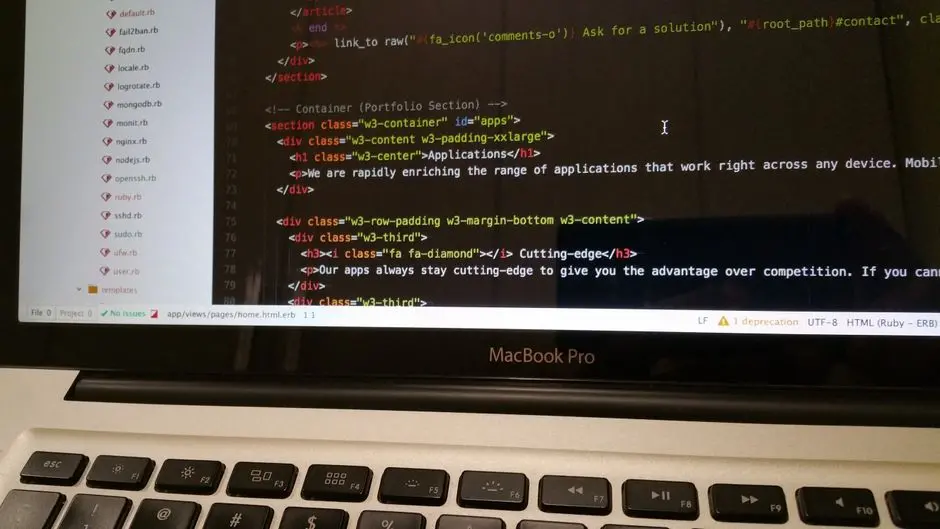
Unlock peak productivity and system stability in Ruby development. The modern Ruby ecosystem offers a vast arsenal of tools, yet many developers navigate its complexities without a cohesive strategy. This article dissects the core components of an optimized Ruby development environment, transforming potential bottlenecks into powerful leverage points. We confront the challenges of version management, dependency resolution, testing rigor, and performance tuning head-on. Prepare to activate a workflow that minimizes friction, accelerates deployment cycles, and elevates code quality to professional-grade standards. Discover how to engineer a development setup that not only functions but excels, driving innovation and efficiency in every line of Ruby code.
Establish Foundational Rigor: Version Management and Dependency Sovereignty
Activate a robust foundation for all Ruby projects by mastering version management and dependency resolution. Inconsistent Ruby versions or conflicting gem dependencies cripple development workflows and introduce unpredictable bugs. We advocate for dedicated version managers like rbenv or RVM to ensure project isolation and seamless switching. These tools empower us to dictate the precise Ruby interpreter for each application, preventing global pollution and maintaining environment purity.
Execute a systematic approach to dependency management. The Gemfile, alongside its crucial counterpart, the Gemfile.lock, serves as the immutable blueprint of your project’s dependencies. We decode the critical role of the Gemfile.lock and Bundler in locking down gem versions, guaranteeing reproducible builds across all development, staging, and production environments. Ignoring this lockfile invites dependency drift, leading to obscure failures. Furthermore, streamline the process of updating these dependencies; leveraging automated solutions like Dependabot to automate gem updates frees development teams from manual toil, ensuring security patches and performance improvements are integrated proactively. A disciplined approach to these foundational elements prevents countless hours of debugging and fosters a stable, predictable development landscape.
Engineer Testing Excellence: Cultivating a Culture of Quality Assurance
Cultivate an unwavering commitment to quality by embedding testing deeply into the development lifecycle. Comprehensive testing frameworks are not merely tools; they are the bedrock of reliable Ruby applications. We champion RSpec as the industry-standard behavior-driven development (BDD) framework for Ruby. Initiate your testing journey by getting started with RSpec for Test-Driven Development (TDD) immediately, writing tests before code to define expected behaviors and drive implementation. This proactive methodology ensures code fulfills its requirements from inception.
Extend your testing capabilities to cover the full spectrum of application functionality. For complex interactions and external service dependencies, learn how to effectively use Mocks and Stubs in RSpec. These techniques isolate units under test, preventing external factors from skewing test results and accelerating test execution. Furthermore, validate your application's exposed interfaces by testing Rails APIs with Request Specs. This approach simulates real HTTP requests, verifying routes, responses, and data serialization. As your test suite expands, safeguard developer efficiency; implement strategies for improving test speed in large Ruby suites through parallelization, focused testing, and intelligent test selection. A fast, reliable test suite fuels developer confidence and accelerates deployment cycles.
Automate Code Quality: Standardizing and Securing Your Ruby Base
Automate the enforcement of code quality and security standards to maintain a pristine and robust codebase. Inconsistent code styles create friction and hinder collaboration. Establish a unified coding style across your team by enforcing the Ruby Style Guide with RuboCop. RuboCop acts as an automated linter and formatter, flagging stylistic deviations and potential logical issues, ensuring every line of code adheres to established best practices. This consistency reduces cognitive load for developers and streamlines code reviews.
Integrate static analysis tools into your continuous integration (CI) pipeline to identify vulnerabilities before they reach production. Deploy Brakeman for static analysis of Ruby security to scan for common web application vulnerabilities, such as SQL injection, cross-site scripting (XSS), and mass assignment. Brakeman provides actionable insights, empowering developers to patch security flaws proactively. Beyond identifying new issues, we must also confront technical debt in existing projects. Equip your team with strategies for the best way to refactor legacy Ruby code, focusing on incremental improvements, controlled scope, and robust test coverage to mitigate risks during modernization efforts. These automated guardians of quality and security transform code reviews from stylistic debates into focused discussions on architectural integrity and business logic.
Deep Dive into Performance: Profiling, Optimization, and Memory Management
Initiate a deep exploration into the performance characteristics of your Ruby applications. Unoptimized code can lead to sluggish user experiences, inflated infrastructure costs, and ultimately, user dissatisfaction. Our objective: systematically identify and eliminate performance bottlenecks. We leverage profiling tools to gain granular insights into execution patterns. Discover specific code segments consuming excessive CPU time or memory by identifying bottlenecks with Ruby-Prof. This powerful profiler visualizes method call graphs and execution times, guiding optimization efforts to the most impactful areas. Do not guess; measure.
Extend your performance investigations to memory consumption. Ruby's garbage collector (GC) performs admirably, but unmanaged memory usage leads to bloat and performance degradation. Implement techniques for memory leak detection in Ruby applications by monitoring heap growth and object allocations over time. Proactive memory management prevents out-of-memory errors and maintains application responsiveness. For targeted performance improvements, benchmark Ruby code snippets precisely, comparing the execution speed of different algorithms or implementations. This scientific approach quantifies the impact of your optimizations. Finally, for high-load applications, fine-tune the Ruby runtime itself; learn about optimizing Ruby Garbage Collection for high load scenarios, adjusting GC parameters to balance throughput and latency. Mastering these profiling and optimization techniques elevates your Ruby applications to peak performance.
Maximize Test Coverage and Impact: Ensuring Comprehensive Validation
Maximize the impact of your testing efforts by ensuring comprehensive code coverage. A high-quality test suite is invaluable, but its effectiveness diminishes if significant portions of your codebase remain untested. We activate tools that measure the reach of your tests. Integrate SimpleCov for measuring test coverage, which provides immediate feedback on which lines, branches, and methods your tests exercise. Aim for high coverage metrics, but always prioritize meaningful tests over mere line coverage. A test that covers a line but doesn't assert correct behavior holds limited value.
Beyond individual methods, ensure your test suite covers critical integration points and user flows. We advocate for a multi-layered testing strategy, combining unit, integration, and end-to-end tests. This comprehensive approach builds confidence that changes will not introduce regressions. Furthermore, cultivate a mindset of continuous improvement regarding your test suite. Regularly review slow tests, identify flaky tests, and refactor complex test setups. A well-maintained, fast-running test suite is a living asset that empowers developers to iterate rapidly and fearlessly. Neglecting test coverage leaves critical blind spots, turning every deployment into a high-stakes gamble. By systematically measuring and improving coverage, we ensure our applications are validated against the real-world scenarios they face.
Streamline Deployment and Maintenance: From Idea to Production with Ease
Streamline the journey from development ideation to production deployment, fostering a seamless and efficient operational pipeline. A well-optimized workflow extends beyond local development; it encompasses every stage of the application lifecycle. Automate repetitive tasks and minimize manual intervention to accelerate deployments and reduce human error. Continuous Integration (CI) and Continuous Deployment (CD) pipelines are non-negotiable for modern Ruby development. These systems automatically run tests, build artifacts, and deploy applications upon code changes, ensuring a consistent and reliable release process.
Consider the complete lifecycle of your application's components. For shared functionalities or reusable logic, learn how to create and publish your own Ruby Gem. This practice encapsulates reusable code, promoting modularity and reducing duplication across projects. A well-designed gem simplifies maintenance and enhances consistency. Furthermore, establish robust monitoring and alerting for your deployed applications. Early detection of issues in production environments is paramount to maintaining uptime and user satisfaction. Log aggregation, performance metrics, and error tracking tools provide crucial visibility into the health of your systems. A streamlined deployment strategy, coupled with proactive monitoring, transforms the often-dreaded release cycle into a confident, automated process, liberating development teams to focus on innovation rather than operational toil.
Architect for Future Readiness: Scaling and Adaptability in Ruby Development
Architect your Ruby development environment for future readiness, embracing scaling and adaptability as core tenets. The landscape of software development shifts constantly, demanding systems that can evolve and expand without requiring complete overhauls. We design our workflows and environments to absorb new requirements, accommodate increased load, and integrate emerging technologies with minimal friction. This foresight ensures long-term viability and reduces technical debt accumulation.
Beyond individual performance optimizations, consider the architectural implications of high-load scenarios. While optimizing Ruby Garbage Collection for high load addresses one aspect, true scalability often demands distributed systems and asynchronous processing. Explore patterns like message queues, background jobs, and microservices to decouple components and distribute workloads effectively. Furthermore, continuously evaluate and integrate new tools and practices that enhance developer experience and operational efficiency. The Ruby ecosystem is vibrant and innovative; staying abreast of new gems, frameworks, and deployment strategies empowers teams to leverage the latest advancements. Cultivate a culture of learning and experimentation. This proactive stance ensures your Ruby development workflow remains agile, potent, and capable of conquering future programming frontiers, transforming challenges into opportunities for growth and innovation.
Key Takeaways
Foundational Setup
Master Ruby version managers (rbenv/RVM) for isolation. Leverage Gemfile.lock with Bundler for reproducible dependency management. Automate gem updates with Dependabot to maintain security and performance.
Testing Mastery
Embrace RSpec for TDD, writing tests first. Utilize Mocks and Stubs for isolated unit testing. Implement Request Specs for robust API validation. Optimize large test suites for speed through parallelization and intelligent selection.
Code Quality & Security
Enforce consistent code style with RuboCop. Integrate Brakeman for static security analysis. Strategically refactor legacy code with controlled, incremental steps and strong test coverage.
Performance Tuning
Identify bottlenecks using Ruby-Prof for detailed execution insights. Implement techniques for memory leak detection. Precisely benchmark code snippets to quantify optimization impact. Tune Ruby's Garbage Collection for high-load scenarios.
Deployment & Modularity
Streamline deployment with CI/CD pipelines. Create and publish Ruby Gems for reusable code. Establish robust monitoring and alerting for production systems.
FAQ
-
Why is Gemfile.lock so critical for Ruby projects?
The Gemfile.lock is paramount because it precisely records the versions of all gems (direct and transitive dependencies) that Bundler installed when you last ran
bundle install. This ensures that every developer on a team, and every deployment environment (staging, production), uses the exact same gem versions, eliminating "it works on my machine" issues and guaranteeing reproducible builds. Without it, newbundle installruns could pull different, potentially incompatible, gem versions. -
How do rbenv and RVM differ, and which should I choose?
Both rbenv and RVM manage multiple Ruby versions on a single machine, allowing per-project isolation. RVM (Ruby Version Manager) takes a more comprehensive approach, managing gemsets, installing dependencies, and modifying shell functions directly. rbenv is lighter-weight and simpler, focusing solely on switching Ruby versions by manipulating the PATH environment variable, relying on Bundler for gemset management. Choose rbenv for a minimalist, focused approach; choose RVM for a more all-encompassing solution with built-in gemset features.
-
What is the primary benefit of using RuboCop in a Ruby project?
The primary benefit of RuboCop is automated enforcement of a consistent code style and best practices across an entire codebase and development team. It catches stylistic deviations, potential bugs, and adherence to the Ruby Style Guide without manual intervention. This standardization reduces cognitive load during code reviews, improves readability, and minimizes disagreements over trivial formatting issues, allowing teams to focus on core logic and architectural decisions.