
Engineer Peak Python Code Quality: Master Testing, Debugging, and Refactoring
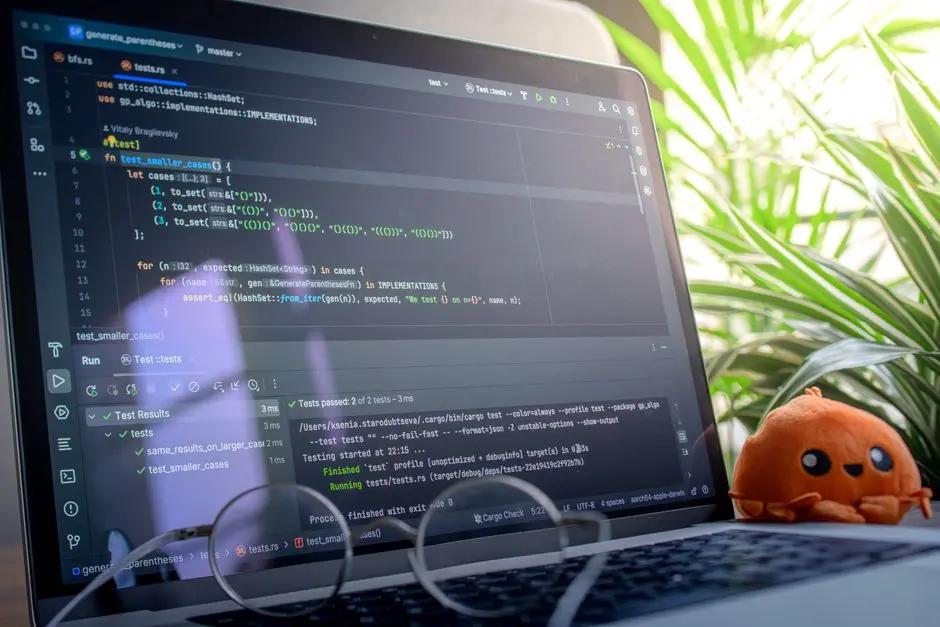
Forge unbreakable Python applications. This definitive resource activates strategic testing, surgical debugging, and proactive refactoring methodologies to elevate your software development practice. We decode the core principles that drive robust, maintainable, and high-performance Python code, transforming complex challenges into actionable exploration. Discover how to systematically identify and eliminate vulnerabilities, optimize execution, and cultivate a development ecosystem where quality is not merely an afterthought but an inherent architectural pillar. Equip your team with the essential frameworks and insider knowledge to conquer programming frontiers, ensuring every line of code stands as a testament to engineering excellence.
The Imperative of Quality: Forging Robust Python Code
We stand at a critical juncture in software engineering: delivering functional code is no longer sufficient. Modern development demands code that is not only operational but also robust, maintainable, scalable, and resilient. This foundational principle activates the need for comprehensive testing and meticulous debugging within Python projects. Neglecting these disciplines incurs significant technical debt, amplifies future development costs, and compromises application reliability in production environments. We must engineer quality directly into the development lifecycle, recognizing it as an investment, not an overhead.
To establish this bedrock of quality, we first engage with structured testing paradigms. A fundamental step involves getting started with unittest in Python, Python's built-in testing framework. This module provides a robust foundation for defining and executing tests, ensuring individual components function as intended. Beyond basic verification, we must also embrace more transformative approaches. Test-driven development in Python (TDD) represents a powerful methodology that flips the traditional development flow. By writing tests before implementation, we clarify requirements, design more cohesive code, and establish a safety net that continuously validates our progress. This proactive stance significantly reduces defect rates and cultivates a culture of architectural foresight.
Implementing a rigorous quality assurance strategy requires a shift in mindset—from reactive problem-solving to proactive prevention. We establish a system where every code commit is subject to scrutiny, not just for functionality but for structural integrity and adherence to best practices. This systematic approach transforms potential vulnerabilities into opportunities for refinement. We recognize that robust code is a byproduct of disciplined development, where testing and debugging are not distinct phases but interwoven threads throughout the entire creation process. This integrated strategy empowers us to build with confidence, delivering solutions that meet and exceed expectations.
Architecting Effective Testing Strategies: Beyond the Basics
Establishing a robust testing framework is paramount for sustained code quality. Beyond `unittest`, we activate `pytest`, a framework renowned for its simplicity, flexibility, and powerful feature set. We initiate this transition by setting up pytest for Python projects, which involves installing the framework and configuring basic test discovery. Pytest's fixture system streamlines test setup and teardown, drastically reducing boilerplate code and making tests more readable and maintainable. This strategic shift empowers developers to write more focused and expressive tests, accelerating the feedback loop during development.
Once `pytest` is operational, our focus shifts to crafting tests that validate the core logic of our applications. This demands a clear understanding of how to rigorously test Python functions and classes. We engineer granular unit tests that isolate specific behaviors, ensuring each function and method performs its designated task correctly under various conditions. For functions, we activate assertions against expected return values given specific inputs. For classes, we instantiate objects, invoke methods, and assert changes in their state or interactions with other objects. This surgical approach to testing builds a high-fidelity safety net, preventing regressions and confirming the integrity of our codebase.
Effective testing strategies are not merely about covering lines of code; they are about validating critical paths and edge cases. We design tests that expose potential vulnerabilities, considering invalid inputs, boundary conditions, and error scenarios. This meticulous foresight transforms our test suite into a powerful diagnostic tool, flagging issues before they escalate. By consistently applying these principles, we forge a testing strategy that acts as a continuous quality gate, maintaining high standards throughout the project lifecycle. This commitment to detail ensures every component contributes reliably to the overall system's stability.
Mastering Advanced Testing Techniques: Isolation and Realism
Elevating our testing capabilities requires venturing beyond straightforward unit tests into more sophisticated techniques. A crucial element involves writing practical pytest test cases that mimic real-world interactions while maintaining test isolation. This means crafting scenarios that reflect actual usage patterns, including data loading, external service calls, and complex business logic. Pytest's parameterized tests, for instance, allow us to run the same test logic with different input data, maximizing test coverage with minimal code duplication. We engineer test cases to be deterministic, ensuring consistent results regardless of the execution environment or order.
Central to achieving true test isolation, especially when dealing with dependencies like databases, APIs, or time-sensitive operations, is the art of mocking. We activate mocking and patching in Python unit tests to replace actual dependencies with controlled test doubles. This technique allows us to simulate specific behaviors of external components without incurring their overhead or side effects. For example, we might mock a database query to return predefined results, or patch an external API call to avoid network latency. This surgical precision ensures that our tests focus solely on the code under examination, making them faster, more reliable, and easier to debug. Common errors include over-mocking, which can lead to tests that don't accurately reflect real system behavior, or under-mocking, which allows external factors to introduce flakiness.
We deploy mocking strategically, identifying clear boundaries where internal code interacts with external systems. Best practices dictate mocking at the boundary of interaction, not deep within the system, to avoid creating fragile tests. This nuanced approach to advanced testing techniques ensures our test suite is both comprehensive and efficient, capable of validating complex behaviors while preserving the agility of our development process. By mastering these methods, we fortify our code's resilience against intricate real-world conditions.
Debugging: Decoding and Eliminating Anomalies
While comprehensive testing aims to prevent defects, inevitably, anomalies emerge. When they do, a methodical and surgical debugging strategy becomes our most potent weapon. We initiate this process by mastering the Python debugger (pdb), Python's built-in interactive debugger. Pdb empowers us to pause execution at specific points, inspect variables, step through code line by line, and evaluate expressions in real-time. This direct interaction with the program's runtime state is invaluable for decoding complex execution flows and pinpointing the exact source of an error. Command-line shortcuts like `n` (next), `s` (step), `c` (continue), and `p` (print) accelerate our diagnostic capabilities, transforming a daunting bug hunt into a systematic investigation.
Beyond interactive debugging, effective error detection and diagnosis hinge on robust logging. We engineer our applications to provide clear, actionable insights into their operational state. This involves understanding how to log and trace Python errors effectively. Python's `logging` module offers a flexible framework for categorizing messages (DEBUG, INFO, WARNING, ERROR, CRITICAL) and directing them to various outputs (console, file, network). Strategic logging allows us to reconstruct the sequence of events leading to an error, even in production environments where interactive debugging is impractical or impossible. Common pitfalls include logging too little, which leaves us blind, or logging too much, which clutters logs and makes critical information difficult to extract.
A well-structured debugging process combines these tools with a logical, hypothesis-driven approach. We form a hypothesis about the bug's cause, use our debugging tools to test it, and iterate until the root cause is identified. This systematic problem-solving minimizes wasted effort and maximizes diagnostic efficiency. By cultivating a disciplined approach to both interactive debugging and logging, we transform code anomalies from roadblocks into clear pathways for understanding and improving our software's behavior.
Proactive Quality Assurance: Beyond Basic Testing
True code quality extends beyond the mere presence of tests; it encompasses the confidence that our tests adequately cover the codebase's critical paths. We activate measuring test coverage in Python to quantify the extent to which our tests exercise the application's source code. Tools like `coverage.py` integrate seamlessly with `pytest` and `unittest` to generate reports detailing line, branch, and function coverage. While high coverage percentages (e.g., 80-90%) do not guarantee bug-free code, they serve as a strong indicator that our test suite is comprehensive enough to catch a significant portion of potential issues. Low coverage, conversely, signals critical gaps that expose our application to risk.
Another crucial dimension of proactive quality is building resilient systems that gracefully handle unexpected situations. This demands a mastery of handling exceptions cleanly in Python. We engineer robust `try-except` blocks, not just to catch errors, but to provide meaningful fallback mechanisms, log contextual information, and prevent cascading failures. Best practices dictate catching specific exception types rather than broad `Exception` clauses, ensuring we only intercept errors we can genuinely handle. We differentiate between anticipated exceptions (e.g., file not found) and programming errors, treating each with appropriate strategies – graceful degradation versus immediate logging and re-raising for developer intervention.
Proactive quality also involves anticipating and mitigating performance bottlenecks before they impact users. We integrate profiling tools into our development workflow to identify inefficient code segments. This foresight minimizes the need for reactive, emergency optimizations. By systematically measuring coverage, strategically handling exceptions, and proactively profiling, we construct a resilient and high-performing application architecture. These advanced quality assurance measures are non-negotiable for delivering professional-grade software that inspires confidence and delivers consistent value to its users.
Elevating Code Health with Static Analysis and Review
Ensuring code quality extends beyond dynamic execution; it penetrates the very structure and style of our source code. We must proactively identify potential issues and enforce consistency before runtime. This begins with utilizing linters and formatters in Python. Tools like `Black` (formatter) automatically reformat code to adhere to a consistent style, eliminating subjective debates and saving valuable developer time. Linters, such as `Flake8` or `Pylint`, meticulously scan code for stylistic errors, potential bugs, code smells, and adherence to PEP 8. Integrating these tools into our development environment ensures every line of code committed aligns with established quality standards, fostering readability and maintainability across the entire project.
Beyond superficial style, we dive deeper into structural integrity with static code analysis in Python projects. This powerful technique involves examining source code without executing it, searching for complex patterns that indicate potential security vulnerabilities, common programming errors, design flaws, and performance issues. Tools like `Pylint` and `Bandit` (for security) automatically detect issues that might be missed by simple linters, providing actionable insights into code complexity, unused variables, potential memory leaks, and insecure coding practices. This proactive identification of deep-seated issues saves significant debugging time and prevents critical failures in production, strengthening the overall architecture of our systems.
The human element remains indispensable in the pursuit of high-quality code. We champion how to conduct effective Python code reviews as a collaborative process for knowledge sharing and quality enforcement. Code reviews involve peers scrutinizing new or changed code for functionality, readability, adherence to standards, and potential defects. A structured review process—focusing on constructive feedback, clear objectives, and a respectful exchange of ideas—elevates the quality bar for every contribution. This multi-layered approach, combining automated analysis with expert human judgment, ensures every piece of code we forge is robust, secure, and maintainable.
Performance and Continuous Improvement: Integrating Quality Lifecycles
Optimizing application performance is an integral component of code quality. Even robust, bug-free code can fail user expectations if it executes sluggishly. We actively engage in debugging performance bottlenecks to ensure our Python applications operate with peak efficiency. This involves employing profiling tools (like `cProfile` or external profilers such as `SnakeViz`) to identify specific functions or code blocks that consume excessive CPU cycles or memory. We analyze call graphs and time distributions to pinpoint hot spots, then apply surgical optimizations, such as algorithmic improvements, judicious use of data structures, or leveraging C extensions where appropriate. This iterative process of measurement, analysis, and refinement is crucial for delivering performant solutions.
Sustaining high code quality demands continuous vigilance, seamlessly integrated into our development workflow. We champion integrating tests in CI/CD pipelines (Continuous Integration/Continuous Deployment) as a non-negotiable practice. Every code commit triggers an automated pipeline that runs unit, integration, and even end-to-end tests, executes linters and formatters, and performs static code analysis. This automated gate ensures that only code meeting predefined quality thresholds proceeds to deployment, preventing regressions and maintaining a consistently stable codebase. CI/CD accelerates feedback to developers, allowing for immediate correction of issues and fostering a culture of continuous quality. It transforms the development process into a high-velocity, high-assurance assembly line.
This integration of performance optimization and CI/CD forms a powerful feedback loop, driving iterative improvement. We do not view quality as a singular checkpoint but as a continuous journey of refinement and validation. By embedding these practices at every stage, we proactively manage risks, enhance operational efficiency, and accelerate the delivery of high-quality software, solidifying our commitment to excellence in every release.
Refactoring for Sustained Excellence: The Path to Masterful Code
Code quality is not a static state but an ongoing commitment. As systems evolve, requirements shift, and understanding deepens, code often accumulates complexities that hinder future development. This necessitates the disciplined practice of refactoring. We activate refactoring Python code for readability as a continuous process, systematically restructuring existing code without altering its external behavior. The primary goal is to enhance clarity, simplify logic, reduce duplication, and improve maintainability. This involves techniques like extracting methods, renaming variables for better expressiveness, consolidating duplicate code, and breaking down large classes or functions into smaller, more focused components. Each refactoring step, no matter how small, aims to make the codebase more comprehensible and adaptable.
Refactoring is not merely about cleaning up; it's about strategic architectural improvement. We apply refactoring principles judiciously, often driven by the desire to add new features or fix bugs, recognizing that a clean codebase facilitates these tasks. Before any significant refactoring, a robust test suite is indispensable. Tests act as a safety net, confirming that our internal changes do not introduce regressions or alter the system's expected behavior. Without this assurance, refactoring can become a perilous endeavor. Therefore, comprehensive unit and integration tests serve as guardians, empowering us to reshape code with confidence, knowing that we preserve its functionality.
Embracing refactoring as an ongoing discipline transforms our relationship with the codebase. It shifts from viewing code as a fixed entity to a malleable, evolving asset. This continuous improvement mindset is critical for long-term project health and team productivity. By consistently investing in the readability and maintainability of our Python code, we create a more resilient, adaptable, and ultimately, more valuable software product. We forge a legacy of excellence, where every line of code contributes to a coherent and elegant system, propelling us toward engineering mastery.
Key Takeaways
Embrace Proactive Quality with TDD
Shift development paradigms by adopting Test-Driven Development (TDD). Write tests before code to clarify requirements, enhance design, and establish a continuous validation safety net from the outset. This active prevention strategy significantly reduces defects and technical debt.
Master Pytest for Robust Testing
Utilize `pytest` for its flexibility and power in crafting efficient and readable test cases. Leverage its fixture system for streamlined setup/teardown and parameterized tests to maximize coverage with minimal code. Focus on isolating and rigorously testing Python functions and classes.
Employ Mocking for Isolated Testing
Activate mocking and patching techniques to isolate units of code from their dependencies (e.g., databases, APIs). This ensures tests focus solely on the code under scrutiny, making them faster, more reliable, and easier to debug without external side effects.
Decode Anomalies with PDB and Logging
Master Python's built-in debugger (`pdb`) for interactive, surgical problem-solving. Complement this with strategic logging using Python's `logging` module to trace errors effectively, reconstruct event sequences, and gain crucial insights in production environments.
Quantify and Enhance Coverage & Exception Handling
Measure test coverage to identify gaps in your test suite and ensure critical code paths are validated. Engineer clean exception handling with specific `try-except` blocks to build resilient systems that gracefully manage unexpected conditions, preventing cascading failures.
Enforce Standards with Linters, Formatters, and Static Analysis
Integrate linters (e.g., `Flake8`, `Pylint`) and formatters (e.g., `Black`) to enforce consistent coding style and detect potential issues early. Deploy static code analysis tools (e.g., `Bandit`) for deeper security and design flaw detection without executing code.
Integrate Quality into CI/CD and Optimize Performance
Automate quality assurance by integrating tests, linters, and static analysis into CI/CD pipelines. Ensure every code commit is validated before deployment. Actively debug performance bottlenecks using profiling tools to optimize execution and deliver efficient applications.
Cultivate Continuous Refactoring
Embrace refactoring as an ongoing discipline to continuously improve code readability, maintainability, and design without altering external behavior. Use a robust test suite as a safety net to confidently restructure code, ensuring sustained excellence and adaptability.
FAQ
-
Why is testing essential in Python development?
Testing is critical for Python development because it validates code functionality, catches bugs early, prevents regressions during new feature development, and ensures the reliability and stability of applications. It reduces technical debt, improves maintainability, and fosters confidence in the software's behavior, ultimately leading to higher quality and more robust products. -
What is the difference between unit testing and integration testing?
Unit testing focuses on testing individual components or units of code (e.g., functions, methods) in isolation to ensure they work correctly. Integration testing, conversely, verifies the interactions between different units or components of a system, ensuring they work together as expected. Unit tests are typically faster and easier to write, while integration tests validate the broader system's behavior. -
How do linters and formatters contribute to code quality?
Linters (like Flake8, Pylint) analyze code for stylistic issues, potential bugs, and adherence to coding standards (e.g., PEP 8), flagging errors without execution. Formatters (like Black) automatically reformat code to enforce consistent style, eliminating manual style adjustments. Together, they ensure code readability, maintainability, and reduce cognitive load, allowing developers to focus on logic rather than formatting.