
> Python > Python Testing and Debugging > Forge Clarity: Refactor Python Code for Unmatched Readability
Forge Clarity: Refactor Python Code for Unmatched Readability
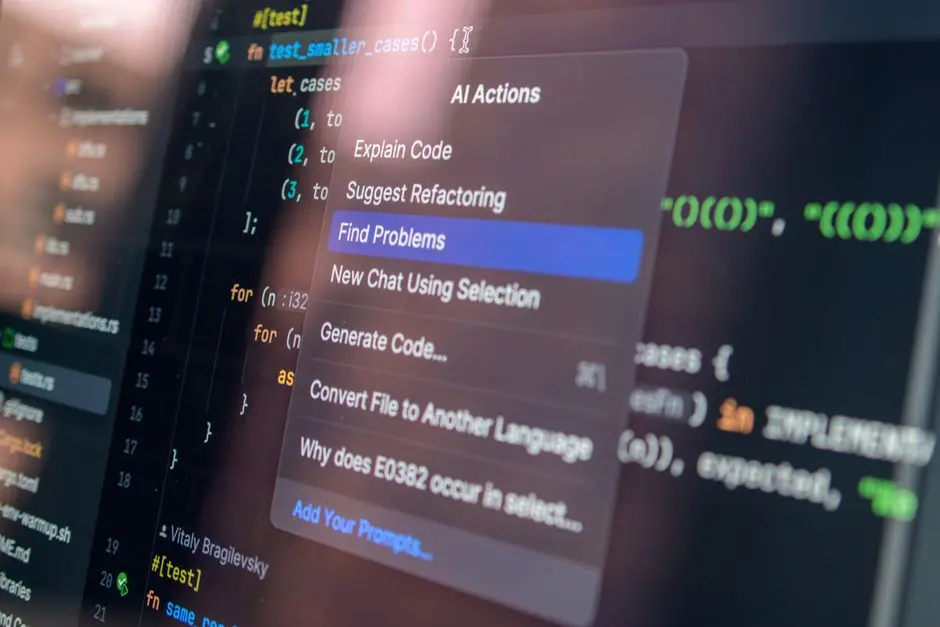
We encounter countless Python projects, ranging from elegant scripts to sprawling applications. Yet, a fundamental challenge often emerges: code complexity threatens maintainability and evolution. Developers globally confront the reality that poorly structured, hard-to-read code becomes a significant liability, impeding progress and inviting bugs. This deep dive into refactoring Python code for readability activates a critical leverage point in your development journey. We decode the strategies to transform opaque logic into crystal-clear narratives, empowering every line of code to communicate its intent directly. This resource engineers a pathway to build resilient, scalable, and genuinely collaborative Python applications.
Understanding the profound impact of well-structured code is paramount, not just for solo development but for seamless team collaboration and future-proofing your projects. Refactoring is not merely an aesthetic exercise; it is a strategic imperative that directly contributes to the overall health and longevity of your codebase. It ensures that every component is optimized for comprehension, reducing cognitive load and accelerating feature development. To ensure code quality with rigorous testing and debugging, we must first sculpt a foundation of impeccable readability.
Forge the Foundation: Why Refactor Python Code for Readability?
We embark on a journey to understand refactoring not as an optional chore, but as an indispensable pillar of modern software development. Refactoring, in essence, is the process of restructuring existing computer code without changing its external behavior. It’s an internal renovation that enhances the internal structure, making the code more comprehensible, maintainable, and adaptable. For Python developers, who champion clarity and simplicity, refactoring is particularly vital. Python’s explicit nature thrives on code that reads almost like plain English, a goal often achieved through meticulous refactoring.
Ignoring refactoring creates technical debt, accumulating interest in the form of bugs, slower development cycles, and increased cognitive load for every developer interacting with the codebase. Unreadable code forces engineers to expend disproportionate effort merely understanding 'what' the code does, before even beginning to consider 'how' to extend or fix it. This drains productivity and dampens innovation. By committing to refactoring, we actively combat this debt, transforming complex spaghetti code into modular, well-organized components that are easier to test, debug, and evolve. This proactive approach ensures that our Python applications remain agile and robust, a testament to our mastery.
The tangible benefits of routine refactoring are undeniable. It enhances code readability, simplifies complex logic, reduces code duplication, and improves overall system design. These improvements directly translate into fewer bugs, faster onboarding for new team members, and a more enjoyable development experience. We sculpt code that not only functions correctly but also communicates its purpose effortlessly, forging a legacy of clear, high-quality software.
import math

def calculate_discounted_price_for_item(price, discount_percentage, tax_rate):
    # This function calculates the final price after discount and tax.
    # It's a bit monolithic and combines several concerns.
    discount_amount = price * (discount_percentage / 100)
    price_after_discount = price - discount_amount
    tax_amount = price_after_discount * (tax_rate / 100)
    final_price = price_after_discount + tax_amount
    return round(final_price, 2)

# Consider refactoring this to separate concerns like discount calculation, tax calculation.
# Original usage:
# item_price = 100
# item_discount = 10
# sales_tax = 5
# final = calculate_discounted_price_for_item(item_price, item_discount, sales_tax)
# print(f"Original final price: {final}") # Output: 94.5
Decode Design Principles: The Pythonic Path to Clarity
To effectively refactor Python code for readability, we must first internalize the foundational design principles that guide Pythonic development. The 'Zen of Python' (import this) provides a profound set of aphorisms, particularly: 'Readability counts,' 'Explicit is better than implicit,' and 'Simple is better than complex.' These aren't mere suggestions; they are commands that direct us towards crafting superior code. Embracing these tenets means consistently prioritizing clarity and straightforwardness over clever, obscure solutions.
PEP 8, Python’s official style guide, serves as our tactical blueprint for consistent code formatting and naming conventions. Adherence to PEP 8 dramatically enhances readability by ensuring uniformity across codebases. It dictates aspects like:
- Meaningful Naming: Variable and function names must be descriptive and convey their purpose instantly. Avoid single-letter variables unless their scope is extremely limited.
- Consistent Formatting: Utilize 4-space indentation, limit line length to 79 characters, and use blank lines to separate logical blocks.
- Docstrings and Comments: Implement comprehensive docstrings for modules, classes, and functions, explaining 'what' they do, 'why' they exist, and 'how' to use them. Comments should clarify 'why' certain decisions were made, not 'what' the code is literally doing.
Beyond style, we activate principles like DRY (Don't Repeat Yourself) and KISS (Keep It Simple, Stupid). The DRY principle commands us to eliminate redundant code by extracting common logic into reusable functions or classes. This not only reduces the codebase size but also centralizes logic, simplifying future modifications and debugging. KISS compels us to seek the simplest possible solution that meets requirements, avoiding unnecessary complexity. By consciously applying these principles, we architect Python code that is inherently clear, maintainable, and a pleasure to explore.
def process_data(data_list):
    # Original, less readable code
    processed_results = []
    for item in data_list:
        if item is not None and isinstance(item, (int, float)) and item > 0:
            squared_value = item ** 2
            if squared_value % 2 == 0:
                processed_results.append(squared_value)
    return processed_results

def is_valid_number(value):
    # Extracted helper function for clarity
    return value is not None and isinstance(value, (int, float)) and value > 0

def process_positive_numbers_and_square_even(data_list):
    # Refactored version, clearer intent
    results = []
    for number in data_list:
        if is_valid_number(number):
            squared = number ** 2
            if squared % 2 == 0:
                results.append(squared)
    return results

# Example usage:
# data = [1, 2, None, 4, 5.5, -3, 6]
# print(f"Original processing: {process_data(data)}")
# print(f"Refactored processing: {process_positive_numbers_and_square_even(data)}")
Execute Surgical Techniques: Core Refactoring Patterns in Python
We dissect the most effective refactoring patterns, transforming complex, entangled code into modular, explicit units. These surgical techniques are the core operations we perform to elevate readability.
Extract Method/Function: This is arguably the most powerful refactoring. When a block of code within a method or function performs a specific, distinct task, we extract it into its own new method or function. This improves modularity, reduces duplication, and gives the new method a descriptive name that clarifies its intent. Consider a long function calculating taxes, applying discounts, and logging; each step becomes a separate, named function.
Rename Variable, Method, or Class: Names are paramount in Python. A clear, descriptive name instantly communicates purpose. We meticulously rename ambiguous variables (e.g.,
x,temp) to meaningful identifiers (e.g.,customer_id,discount_rate). The same principle applies to methods and classes; their names must accurately reflect their responsibilities and behaviors. This single step dramatically reduces the cognitive load required to understand code.Simplify Conditional Expressions: Complex nested
if/elsestatements often obscure logic. We untangle these by:- Extracting Conditionals: Move complex conditions into well-named helper functions.
- Using Guard Clauses: Handle error conditions or edge cases early, returning immediately, which flattens the code structure.
- Polymorphism: Replace conditional logic with polymorphic behavior when dealing with different types or states, especially within classes.
Remove Duplicated Code: The DRY principle is central here. We identify identical or very similar code blocks repeated across different parts of the system. We then extract this common logic into a single, reusable function, method, or class, ensuring that changes only need to be made in one place. This reduces bugs and makes the codebase lighter and more agile.
Improve Data Structures: Sometimes, the unreadability stems from poorly chosen data structures. We analyze whether lists should be dictionaries for faster lookups, or if simple tuples should evolve into custom classes (
dataclassesornamedtuples) for clearer attribute access. Optimizing data representation simplifies the logic that operates on it.
By mastering these techniques, we equip ourselves to systematically dismantle complexity and reconstruct code that is not only functional but inherently clear and easy to navigate.
class PaymentProcessor:
    def __init__(self, currency_symbol, exchange_rate):
        self.currency_symbol = currency_symbol
        self.exchange_rate = exchange_rate

    def process_order_details_and_calculate_total(self, items, customer_id, apply_loyalty_discount=False):
        # Original method combining too many responsibilities
        total_amount = 0
        for item in items:
            total_amount += item['price'] * item['quantity']

        if apply_loyalty_discount:
            total_amount *= 0.9  # 10% discount

        # Assume payment gateway interaction and logging here (simplified)
        print(f"Processing order for {customer_id} with total {self.currency_symbol}{total_amount:.2f}")
        self._log_transaction(customer_id, total_amount)

        return total_amount

    def _log_transaction(self, customer_id, amount):
        print(f"Logging transaction: Customer {customer_id}, Amount {amount}")

class RefactoredPaymentProcessor:
    def __init__(self, currency_symbol, exchange_rate):
        self.currency_symbol = currency_symbol
        self.exchange_rate = exchange_rate

    def _calculate_subtotal(self, items):
        # Extracted method for calculating subtotal
        subtotal = sum(item['price'] * item['quantity'] for item in items)
        return subtotal

    def _apply_discount(self, amount, apply_loyalty_discount):
        # Extracted method for applying discounts
        if apply_loyalty_discount:
            return amount * 0.9
        return amount

    def _format_currency(self, amount):
        # Helper for currency formatting
        return f"{self.currency_symbol}{amount:.2f}"

    def process_order(self, items, customer_id, apply_loyalty_discount=False):
        # Refactored public method with clearer steps
        subtotal = self._calculate_subtotal(items)
        final_amount = self._apply_discount(subtotal, apply_loyalty_discount)

        print(f"Processing order for {customer_id} with total {self._format_currency(final_amount)}")
        self._log_transaction(customer_id, final_amount)

        return final_amount

    def _log_transaction(self, customer_id, amount):
        # Reused or potentially more detailed logging
        print(f"Logging transaction: Customer {customer_id}, Amount {amount}")

# Example Usage:
# processor = PaymentProcessor('€', 1.1)
# processor.process_order_details_and_calculate_total([{'price': 50, 'quantity': 2}], 'CUST001', True)
#
# refactored_processor = RefactoredPaymentProcessor('$', 1.0)
# refactored_processor.process_order([{'price': 50, 'quantity': 2}], 'CUST002', True)
Engineer Robustness: Tools and Test-Driven Refactoring in Python
Effective refactoring demands a rigorous toolkit and a disciplined process. We leverage specialized tools and integrate a test-driven approach to ensure that our internal code improvements do not inadvertently alter external behavior. This critical safeguard prevents the introduction of new bugs while enhancing clarity.
Automated Testing: The Refactorer's Safety Net
Before initiating any significant refactoring, we establish a robust suite of automated tests. These tests function as a behavioral contract: they define precisely how our code should behave. Our strategy involves:
- Write Comprehensive Tests: Ensure adequate test coverage for the code segment slated for refactoring. These tests must capture all expected behaviors, including edge cases.
- Run Tests & Confirm Pass: Execute all tests to confirm the existing code functions correctly. This baseline is non-negotiable.
- Refactor in Small Steps: Apply refactoring techniques incrementally. After each small change, immediately run the tests again.
- Verify External Behavior: If all tests pass, we confidently proceed to the next small refactoring step. If a test fails, we instantly know the refactoring introduced a bug and can pinpoint the exact change that caused it, allowing for swift correction.
This 'red-green-refactor' cycle, often associated with Test-Driven Development (TDD), is equally powerful for refactoring. It transforms a potentially perilous operation into a controlled, low-risk endeavor, activating genuine code robustness.
Leveraging Python Tools for Automated Refactoring & Analysis
Python's ecosystem provides powerful allies in our quest for readability:
- Linters (Flake8, Pylint): These tools automatically analyze code for stylistic issues (PEP 8 violations), potential bugs, and code complexity. They highlight areas ripe for refactoring.
- Code Formatters (Black, autopep8): Black, in particular, formats Python code uncompromisingly and automatically, ensuring consistent style across entire projects without developer intervention. This eliminates debates over formatting, allowing us to focus on structural improvements.
- Integrated Development Environments (IDEs): Modern IDEs like PyCharm offer sophisticated refactoring capabilities (e.g., 'Extract Method,' 'Rename,' 'Change Signature') that automate many tedious tasks, maintaining syntactic correctness throughout the process. We harness these features to accelerate our refactoring efforts, ensuring precision and minimizing manual errors.
By strategically deploying these tools alongside a test-driven mindset, we engineer a powerful system for continuous code improvement, securing both readability and operational integrity.
import unittest

# Original function (potentially to be refactored)
def calculate_area(length, width):
    if length <= 0 or width <= 0:
        raise ValueError("Dimensions must be positive")
    return length * width

# Refactored function (hypothetical, for demonstration)
def get_rectangle_area(length_value, width_value):
    # Renamed parameters for clarity
    if not (isinstance(length_value, (int, float)) and isinstance(width_value, (int, float))):
        raise TypeError("Length and width must be numeric")
    if length_value <= 0 or width_value <= 0:
        raise ValueError("Dimensions must be positive")
    return length_value * width_value

class TestAreaCalculation(unittest.TestCase):
    def test_positive_dimensions(self):
        # Test before refactoring
        self.assertEqual(calculate_area(5, 10), 50)
        self.assertEqual(calculate_area(2.5, 4), 10)

    def test_zero_or_negative_dimensions_original(self):
        # Test before refactoring
        with self.assertRaises(ValueError):
            calculate_area(-1, 5)
        with self.assertRaises(ValueError):
            calculate_area(0, 10)

    def test_positive_dimensions_refactored(self):
        # Tests for the refactored function
        self.assertEqual(get_rectangle_area(5, 10), 50)
        self.assertEqual(get_rectangle_area(2.5, 4), 10)

    def test_zero_or_negative_dimensions_refactored(self):
        # Tests for the refactored function
        with self.assertRaises(ValueError):
            get_rectangle_area(-1, 5)
        with self.assertRaises(ValueError):
            get_rectangle_area(0, 10)

    def test_non_numeric_dimensions_refactored(self):
        # Additional test case introduced by refactoring to handle new validation
        with self.assertRaises(TypeError):
            get_rectangle_area('a', 5)

# To run these tests:
# If saved as a file, e.g., `test_refactor.py`:
# python -m unittest test_refactor.py
Sustain Excellence: Strategic Refactoring for Continuous Evolution
Sustaining a high level of code readability requires a strategic, ongoing commitment, rather than a one-time event. We integrate refactoring into our daily development workflow, recognizing it as a continuous process vital for long-term project health. This proactive approach prevents the accumulation of technical debt and ensures our Python applications remain adaptable and robust for future evolution.
When to Refactor: Identifying Opportunities
Refactoring is not an arbitrary exercise; it is triggered by specific signals:
- The Boy Scout Rule: 'Leave the campground cleaner than you found it.' When modifying existing code, we make a small effort to improve its readability or structure, even if the change is unrelated to our primary task. This incremental approach steadily elevates the overall codebase quality.
- Adding New Features: Before implementing a new feature, we pause to assess the existing code in that area. Often, a small refactoring can simplify the integration of the new functionality, making it cleaner and less prone to bugs.
- Fixing Bugs: Debugging frequently exposes areas of poor design or confusing logic. Once a bug is fixed, we seize the opportunity to refactor the problematic code segment, preventing similar issues in the future.
- Code Reviews: Peer code reviews are invaluable. They provide fresh perspectives, highlighting areas of complexity or unclarity that can benefit from refactoring. We activate this feedback loop to collectively enhance our codebase.
- High Code Complexity: Tools like linters or code complexity metrics (e.g., cyclomatic complexity) can identify functions or classes that are overly complex, signaling a strong need for refactoring.
Best Practices for Effective Refactoring:
- Small, Atomic Steps: Each refactoring step should be minimal and focused, like renaming a variable or extracting a single function. This approach ensures that if something breaks, the cause is immediately obvious and isolated.
- Continuous Testing: As detailed previously, running tests after every small change is non-negotiable. This guarantees that internal restructuring doesn't alter external behavior.
- Version Control: Commit frequently with clear messages after each successful refactoring step. This allows for easy rollback if issues arise and provides a clean history of improvements.
- Team Collaboration: Establish clear team guidelines and foster a culture where refactoring is encouraged and understood. Regular discussions and pair programming can align refactoring strategies across the team.
- Don't Refactor and Add Features Simultaneously: Separate refactoring commits from feature development commits. This keeps changes isolated, simplifying reviews and reducing the risk of introducing bugs.
By embracing these strategic imperatives, we cultivate a development environment where clarity, maintainability, and continuous improvement are deeply embedded in our Python journey. We don't just write code; we sculpt it for enduring excellence.
Key Takeaways
Core Purpose of Refactoring
Refactoring restructures internal code without changing external behavior. It enhances readability, maintainability, and adaptability, directly combating technical debt. Pythonic development demands clear, explicit code, making refactoring a critical strategic imperative for robust and scalable applications.
Guiding Principles for Readable Python
Adhere to the 'Zen of Python' (Readability counts, Explicit is better). Follow PEP 8 for consistent naming and formatting. Apply DRY (Don't Repeat Yourself) to eliminate redundancy and KISS (Keep It Simple, Stupid) to avoid unnecessary complexity. These principles sculpt inherently clear and maintainable code.
Essential Refactoring Techniques
Master surgical patterns: Extract Method/Function to modularize tasks; Rename variables, methods, classes for clarity; Simplify Conditional Expressions using guard clauses or polymorphism; Remove Duplicated Code following DRY; and Improve Data Structures for optimal representation. These actions directly reduce cognitive load.
Tools & Test-Driven Refactoring
Engineer robustness by coupling refactoring with automated testing. Implement the 'red-green-refactor' cycle: write tests, confirm pass, refactor in small steps, rerun tests. Leverage tools like Linters (Flake8, Pylint) for quality analysis, Formatters (Black) for style consistency, and IDEs (PyCharm) for automated refactoring functionalities.
Strategic Continuous Improvement
Integrate refactoring into daily workflows. Apply the 'Boy Scout Rule': leave code cleaner than found. Identify refactoring opportunities when adding features, fixing bugs, or during code reviews. Execute in small, atomic steps, commit frequently, and separate refactoring from feature development to maintain control and clarity.
FAQ
-
How often should I refactor my Python code?
We don't schedule refactoring as a large, infrequent event. Instead, we integrate it as a continuous process. Adopt the 'Boy Scout Rule': always leave the code cleaner than you found it. Refactor small, problematic sections when adding new features, fixing bugs, or during routine code reviews. Proactive, small refactorings prevent the build-up of technical debt.
-
What are the biggest risks when refactoring Python code?
The primary risk is introducing new bugs or altering the external behavior of the code. We mitigate this by having comprehensive automated test coverage before, during, and after refactoring. Other risks include 'analysis paralysis' (overthinking) or 'big bang' refactoring (attempting too much at once), both of which are overcome by working in small, incremental steps.
-
Can refactoring improve the performance of my Python application?
While the primary goal of refactoring is to improve readability, maintainability, and structure, it can indirectly lead to performance improvements. By simplifying complex logic, removing redundant computations, and optimizing data structures, we often uncover inefficiencies that can be addressed. However, if performance is the sole objective, we specifically apply performance optimization techniques after ensuring code clarity.
-
What is the difference between refactoring and rewriting code?
Refactoring is the process of restructuring existing code without changing its external behavior. It's an internal improvement. Rewriting, conversely, means discarding significant portions or the entirety of an existing codebase and starting anew, often to overcome fundamental architectural flaws or to switch technologies. We choose refactoring to evolve a healthy codebase; we consider rewriting only when the existing codebase is irredeemable.